- The owner changing the locks on her own property apparently made for an interesting morning. The locksmith, a broad-shouldered man named Carl, checked my identification, property records, and tax documents before replacing every single lock.
- “You want extra copies?” he asked.
- “Two.”
- He handed them over, and I slipped both into my purse. Nobody else received one.
- Inside, the house felt unfamiliar. The living room smelled like Evan’s cedar aftershave. Mail addressed to him sat on the kitchen counter—not junk mail, but bank statements, a business envelope, and a subscription. People do not casually redirect mail to a vacation property unless they are beginning to treat it as their permanent address.
- Upstairs, the guest room had changed even more. The desk remained, but a second filing cabinet had appeared. A shelf held folders labeled with household expenses: Internet, Dock Maintenance, Utilities, Insurance.
- I opened nothing that belonged to them; I didn’t need to. The labels told me enough.
- In the closet hung several of Evan’s suits and Claire’s dresses. Toiletries filled the bathroom drawers. This was no longer an occasional summer visit—they were slowly establishing themselves as the owners.
- When I reached the primary bedroom, I froze. The framed photograph of Thomas and me had been removed from my nightstand. In its place stood a picture of Claire, Evan, and their children. My photograph had been tucked facedown inside the bottom drawer.
- I picked it up. Thomas was laughing in the picture, one arm wrapped around me while I squinted against the bright sun. For a moment, all the anger drained away, replaced by something that hurt far worse. I hadn’t built this house to exert power; I had built it because I missed my husband. And my own daughter had helped erase him from it.
- I returned the picture to the nightstand, then walked through every room with a notebook, recording what had been altered, what belonged to me, and what belonged to them.
- When I opened the hall closet, I found one final surprise: three cardboard boxes stacked beneath the coats, each labeled in Claire’s handwriting: MOM’S THINGS.
- I opened the first box: my books. The second contained kitchen linens and serving dishes I had bought for the house. The third held family photographs.
- They had already started packing me out of my own life.
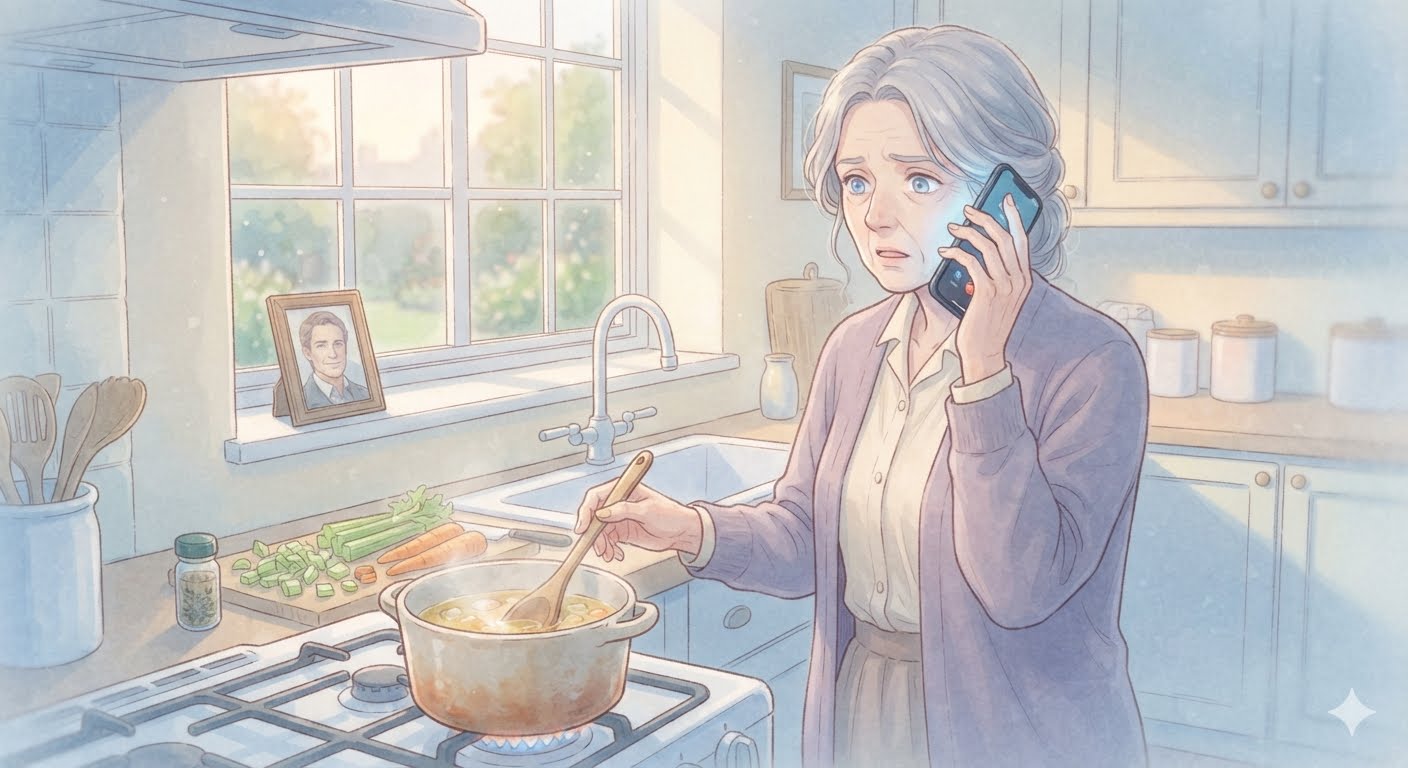
- That was the moment my sadness hardened into something useful. I called my son, Daniel.
- “Are you busy?”
- “I can talk. What happened?”
- “Did Claire ever tell you I was giving her the lake house?”
- The line went dead silent. Finally, Daniel said, “Mom… she told me you already had.”
- I gripped the phone tightly. “When?”
- “Months ago.”
- My stomach dropped. “What exactly did she say?”
- “That you wanted her family to have it. She said you’d decided maintaining it was getting to be too much for you.”
- I stared at the boxes marked MOM’S THINGS. Claire hadn’t simply been hoping I would give her the property—she had already started telling people I had. Suddenly, the attorney’s papers did not look like the beginning of their plan; they looked like the final signature they needed to seal it.
- Daniel wanted to drive to the lake immediately, but I urged him not to.
- “What are you going to do?” he asked.
- “I don’t know yet.”
- That was a lie. I knew exactly what I was going to do first: stop reacting and start documenting.
- Part 5
- Years in a hospital taught me that emotion matters, but records win arguments. So I spent the next several days quietly collecting mine: the deed, purchase agreement, construction invoices, tax payments, insurance records, utility bills, and bank transfers. Every piece of paper told the same unambiguous story—the lake house belonged solely to me. No shared ownership, no verbal arrangement, no financial contribution from Claire or Evan. Nothing.
- I also called the law firm listed on the transfer paperwork. The attorney, Mr. Palmer, sounded distinctly uncomfortable when I explained who I was.
- “I was under the impression you had already discussed this with your daughter,” he said.
- “I had not.”
- Another pause. “I see.”
- “Who contacted you?”
- “Mr. Ross.”
- Evan.
- “Did he represent himself as my legal representative?”
- “No. He said the family had reached an understanding and asked us to prepare documents for your review.”
- An understanding. That was a careful word for something I had never agreed to.
- “Did he tell you I planned to transfer the property?”
- “Yes.”
- “Did he tell you I was having difficulty maintaining it?”
- A longer silence followed. “Yes.”
- I thanked him and ended the call.
- That afternoon, Claire texted me: Are you at the lake house?
- I looked through the kitchen window at the dock. Yes.
- Three dots appeared immediately. Evan needs to get into the house.
- Then he can call the owner.
- Mom.
- What?
- Why are you doing this?
- I nearly typed the angry response flooding my mind. Instead, I wrote: I’m staying here for a few days.
- Her reply came seconds later: We already made plans for this weekend.
- So had I.
- The next morning, I called a local real estate agent named Susan Bell. She arrived in a cream-colored SUV with a leather folder tucked under her arm. Susan had sold several waterfront homes in the area and knew the market intimately. She walked the property slowly—evaluating the dock, shoreline, upgraded kitchen, wide porch, stone fireplace, and acreage.
- “You’ve maintained this beautifully,” she said.
- “I tried.”
- She looked out toward the water. “Are you certain you want to sell?”
- I had expected that question to sting. Instead, it brought absolute clarity. I looked at the porch where Thomas should have grown old beside me, then through the window at the pale drapes Claire had chosen and the office Evan had built in my guest room.
- “Yes,” I said. “I’m certain.”
- Susan recommended listing slightly above my expectation. Waterfront inventory was low, demand was strong, and she believed we could attract serious buyers quickly if priced correctly.
- “How quickly?”
- She raised an eyebrow. “How motivated are you?”
- “Very.”
- By that evening, professional photographs had been taken. By the following afternoon, the listing went live. I didn’t tell Claire or Evan. I told Daniel only because I didn’t want him hearing it from someone else.
- He was silent for several seconds before saying, “Good.”
- “You don’t think I’m overreacting?”
- “Mom, they changed the locks.”
- “I know.”
- “They packed your belongings.”
- “I know.”
- “They told me the house was already theirs.”
- I closed my eyes. “I know.”
- “Then stop asking whether you’re the unreasonable one.”
- That sentence grounded me more than he knew.
- Part 6
- The first offer arrived that night; the second came the next morning. The third involved complex financing, so I rejected it. Then Susan called with another.
- A married couple from out of state had been searching for a lake property for over a year. They offered cash, no financing contingency, minimal inspection requests, and a fast closing—all at a very strong price point.
- “They’re serious,” Susan said.
- “How soon can they close?”
- “About a week, assuming the title work stays clean.”
- “Take it.”
- She hesitated. “Margaret, once you sign—”
- “I understand.”
- That evening, headlights swept across the front windows as Evan’s SUV pulled into the driveway. Claire got out first, followed by Evan. Neither looked pleased.
- I stepped onto the porch before they reached the door.
- Evan held up his hand. “My key doesn’t work.”
- “That’s correct.”
- “You changed the locks?”
- “Yes.”
- He stared at me as if I had confessed to breaking into his home. Claire folded her arms. “Mom, this is getting ridiculous.”
- “What part?”
- “The games.”
- I looked at her. “You mean changing locks without permission?”
- Her expression tightened. Evan stepped forward. “We changed them for security.”
- “Then why didn’t I get a key?”
- “Because you weren’t supposed to be here this weekend.”
- I actually smiled—he had realized what he admitted a moment too late. Claire shot him an icy look.
- I rested one hand on the porch railing. “Evan, you sent an attorney documents to transfer my property to you.”
- “It was estate planning.”
- “You told the attorney we had already discussed it.”
- “We talked about the future.”
- “No. You talked. I listened.”
- His face flushed red. “This place is being wasted.”
- There it was—no more polished language, no more fake concern about maintenance, no more pretense.
- “Wasted on whom?”
- “You.”
- Claire whispered, “Evan—”
- But he was too angry to stop. “You come here a few times a year. We use it. The kids love it. We’ve invested ourselves in this place.”
- “Yourselves?”
- “We’ve spent time here.”
- “Time is not a mortgage payment.”
- “That’s not what I mean.”
- “I know exactly what you mean.”
- Claire stepped toward me. “Mom, can we please go inside?”
- “No.”
- Her mouth opened in shock.
- I continued, “You told Daniel I had already given you the house.”
- Her expression shifted instantly. Evan looked at her—just for a fraction of a second—but I caught the sudden flicker of panic between them.
- “Why would you tell him that?” I asked.
- Claire swallowed hard. “I probably said you were thinking about it.”
- “No, he remembers the conversation clearly.”
- “Then he misunderstood.”
- “He usually doesn’t.”
- Evan shook his head. “This is insane.”
- I nodded. “On that, we agree.”
- They left in a rage. Evan slammed his car door hard enough to rattle the windows, and Claire never looked back. I watched their taillights disappear into the trees before stepping inside. For the first time since building the house, I slept with every door locked.
- The next morning, Susan called. “The buyers signed.”
- I stared at the sunlight glittering across the cove. “When do we close?”
- “Friday.”
- After the call, I walked down to the dock and sat where Thomas and I were supposed to have shared hundreds of quiet mornings. I had expected to feel like I was losing him all over again; instead, I felt strangely free.
- There was only one detail left: Claire and Evan still believed they were fighting to seize my lake house. They had no idea that in less than a week, there would be nothing left for them to take.
- Part 7
- Closing day was bright—almost offensively beautiful. It was the kind of morning Thomas used to call “too nice for paperwork.” I wore navy slacks, a white blouse, and the small silver watch he had given me on our twenty-fifth anniversary.
- ,Initial here, sign there, verify this, confirm that. I read everything; years of nursing paperwork had cured me of signing anything without reading it first.
- Finally, the closing attorney looked over his glasses. “Mrs. Hale, I need to confirm that you are voluntarily selling this property and that no one is pressuring you to complete this transaction.”
- I thought about Claire telling me not to visit. Evan changing the locks. My photographs boxed away. The legal transfer documents. Legally, maybe.
- “Yes,” I said. “This is entirely my decision.”
- I signed.
- The wire transfer reached my bank account later that afternoon. The amount on the screen was significantly larger than what I had spent building the house, as property values had climbed steeply since I bought the land. I stared at the balance for a few seconds before closing the app. The money was satisfying, but it wasn’t the point.
- The point was that no one could take the house from me anymore—it was no longer mine to surrender.
- I spent the following days at home quietly attending to ordinary things: repairing a loose cabinet hinge, buying tomatoes at the farmers market, and having lunch with Daniel. Peaceful, simple days. Claire didn’t call, and neither did Evan.
- Then Saturday arrived.
- At 1:17 in the afternoon, my phone began vibrating across the coffee table: Claire. I let it ring. A minute later, she called again. Then Evan. Then Claire. Then Evan. Five missed calls in less than ten minutes.
- A text appeared: CALL ME NOW. Then another: WHAT DID YOU DO?
- I poured myself a glass of iced tea before calling her back. She answered before the first ring finished.
- “Mom!” Her voice was so loud I had to pull the phone away from my ear.
- “Hello, Claire.”
- “There are people in the house!”
- “What people?”
- “Strangers! There’s a moving truck here! Some woman is carrying boxes into the kitchen, and a man just told Evan to get off the property!”
- I sat down. “They’re probably the new owners.”
- Silence. Not confusion—not right away. First came a stunned silence, followed by a sharp intake of breath.
- “What?”
- “I sold the lake house.”
- Another silence stretched out, much longer this time.
- “You what?”
- “I sold it.”
- “You can’t!”
- “I already did.”
- “When?”
- “The closing was completed yesterday.”
- Claire let out a sound somewhere between a gasp and a sob. Then I heard Evan’s voice in the background: “Put it on speaker!”
- “No!” Claire snapped, then turned back to the phone. “Mom, tell me you’re joking.”
- “I’m not.”
- “You sold our lake house?”
- I closed my eyes. There it was: our.
- “Your lake house?”
- “You know what I mean!”
- “I actually don’t.”
- “We use that house! The kids spend their summers there! Evan works from there! We have our things there!”
- “You also changed the locks on a house you didn’t own.”
- “That was for security!”
- “You sent me legal documents attempting to transfer ownership.”
- “That wasn’t—”
- “You packed my belongings into boxes.”
- Her breathing grew ragged.
- Part 8
- I continued, “You told Daniel the property was already yours. You removed photographs of my husband from the house he and I dreamed of building. And then you called to tell me not to come because your husband wanted it for his immediate family.”
- “Mom, I was angry!”
- “You sounded very calm.”
- “I didn’t think you would react like this!”
- That phrase caught my attention. “React like what?”
- “Sell it!”
- I stared through my living room window at a squirrel digging in the garden. “You didn’t think I would sell my own property?”
- “No! Of course not!”
- “Why?”
- “Because it’s family property!”
- “No, Claire. It was my property.”
- “You know what I mean.”
- “I do. That’s the problem.”
- She began crying—real tears, I think. But crying does not make a person innocent.
- “What are we supposed to do now?” she asked.
- The question stunned me. “About what?”
- “Our summer!”
- I almost laughed. Not because it was funny, but because after everything, her focus remained entirely on her own plans and inconvenience.
- “You can rent a place,” I said.
- “Do you know what lake rentals cost?”
- “Yes.”
- “Evan has clients coming!”
- “That sounds like something Evan needs to manage.”
- “He has equipment inside!”
- “The buyers agreed to temporarily store personal items in the garage. Susan can coordinate a pickup.”
- Evan’s voice suddenly boomed through the speaker: “This is vindictive!”
- “Hello, Evan.”
- “You did this to punish us!”
- “I sold property that belonged to me.”
- “You knew we relied on that house!”
- “You relied on my continued tolerance.”
- He raised his voice. “You’ve destroyed a family tradition over a misunderstanding!”
- “A misunderstanding is missing a dinner reservation. You changed my locks.”
- “We were protecting the property!”
- “From whom? Me?”
- He had no answer.
- Claire took the phone off speaker, her voice dropping to a fragile whisper. “Mom, please. Can you undo it?”
- “No.”
- “What if we buy it back from them?”
- “You’re welcome to ask.”
- “With what money?”
- That admission exposed a layer I hadn’t yet considered. I sat up straighter.
- “What do you mean?”
- “Nothing.”
- “Claire.”
- “We thought… we thought if the house were transferred to us, we could refinance some things.”
- A cold stillness settled over me. “Refinance what?”
- “Forget it.”
- I understood enough. They hadn’t just wanted a summer house; they had been counting on my property as a financial asset.
- “How much trouble are you two in?”
- “It’s none of your business!”
- “Then neither was my house.”
- She sobbed harder. “We just thought you would help us!”
- “You never asked for help.”
- “Because you always make everything so complicated!”
- “No, Claire. I force people to state their actual intentions.”
- She went silent. I realized then what they had been avoiding all along: they never wanted to admit, “Give us your property because we need its value.” They preferred softer phrases—family legacy, estate planning, practicality, immediate family. Anything to mask the truth.
- Claire whispered, “You could have talked to me before selling.”
- Something inside me finally settled. “You could have talked to me before trying to steal it.”
- I hung up.
- For three days, there was silence. On the fourth morning, someone knocked on my door.
- Claire stood outside alone—no makeup, hair tied in a messy knot, eyes red and swollen. For the first time in years, she looked less like Evan’s wife and more like the frightened child who used to run into my bedroom after a nightmare.
- I opened the door, but I didn’t step aside.
- “What do you want, Claire?”
- She looked down at her hands. “I want to tell you the truth.”
- Judging by the fear in her eyes, I knew the lake house was only the beginning of what she and Evan had been hiding.
- Part 9
- I eventually invited Claire inside. She sat at the kitchen table—the exact room where she had called to tell me I wasn’t welcome at my own home. It’s striking how ordinary rooms become landmarks after enough damage occurs inside them.
- Claire wrapped both hands around her coffee mug. For several minutes, she remained silent, and I didn’t fill the space. If she wanted honesty, she had to find the words herself.
- Finally, she whispered, “Evan’s business is in trouble. Bad trouble.”
- I waited.
- “Bad enough that we’ve been shuffling money around for almost a year.”
- I felt no triumph, only exhaustion. “And the house?”
- She kept her eyes on the table. “Evan thought if you transferred it to us, we could use it as collateral.”
- There it was. Not retirement planning, not family tradition, not preserving a legacy—collateral.
- “Did you agree with him?”
- “At first, no.”
- “At first?”
- She winced. “He kept insisted it would eventually be mine anyway.”
- “And you believed him.”
- “I wanted to.”
- That was probably the most honest thing she had said. She wiped her eyes. “He said we’d stabilize the business, pay down the debt, and then fix the ownership details however you wanted.”
- I stared at my daughter. “You were willing to gamble the home your father and I built because your husband made terrible financial choices?”
- “I know how it sounds.”
- “It sounds like exactly what happened.”
- She began crying again. “I was scared.”
- “So was I when I found myself locked out of my own house.”
- “I’m sorry.”
- “You packed my things.”
- “I’m sorry.”
- “You removed your father’s photograph.”
- Her face crumpled. “That was Evan.”
- “And you left it in the drawer.”
- She covered her mouth with her hand, displaying real shame for the first time.
- “I don’t know when I became this person,” she whispered.
- I studied her. I could have comforted her—for most of her life, I would have. When she scraped her knees, I cleaned them; when her heart was broken, I stayed up listening; when her first apartment flooded, I rushed over with towels. A mother spends decades running toward her child’s pain, but eventually, she must learn the difference between pain and consequences.
- “I think you became this person one small choice at a time,” I said quietly. “You let Evan claim the guest room. You let him change my house. You helped pack my belongings. You told your brother the property was already yours. And you allowed an attorney to draft transfer papers based on a lie.”
- Claire wept silently.
- “You had dozens of chances to stop.”
- “I know.”
- “And you didn’t.”
- “I know.”
- That acknowledgment meant more than another apology. She looked up and asked if I hated her.
- “No.”
- “Do you forgive me?”
- I weighed the question carefully. “I don’t intend to spend the rest of my life holding onto anger, so yes, eventually I will.”
- A flicker of hope touched her face, but I finished the thought: “However, forgiveness doesn’t mean returning to the relationship we had before.”
- Her face fell. “Mom—”
- “I don’t trust you.”
- She looked as though I had struck her.
- “I love you,” I added. “Those are not the same thing.”
- Part 10
- She stared down into her cup. “What happens now?”
- “You and Evan resolve your financial problems without involving me.”
- “He thinks you’ll help once you cool down.”
- I almost smiled. “Then he still doesn’t know me at all.”
- Claire gave a weak, bitter laugh. “No. I guess he doesn’t.”
- I made my terms clear: I would not lend them money, cosign loans, purchase property for them, or engage in any discussions regarding their potential inheritance. “My estate planning is private from here on out.”
- She nodded. “And Evan?”
- “What about him?”
- “He wants to apologize.”
- “He can write a letter.”
- “You won’t see him?”
- “Not now.”
- That “not now” lasted a very long time. Evan sent three emails; I deleted the first two unread. The third was an apology that still managed to justify his actions by citing financial pressure. I stopped reading halfway through. An apology that explains why the victim should understand the betrayal is just an argument in disguise.
- Claire and Evan eventually sold their large suburban house and moved into a smaller rental. His business survived, but only after a painful restructuring. None of it involved me.
- Claire and I spoke occasionally—birthdays, holidays, updates about the children. For a long time, every interaction felt delicate, like walking on thin ice. She stopped asking for favors, and I stopped offering them automatically. Strangely, that boundary improved our relationship; there was less pretense.
- The following spring, I sold my own house—not out of pressure, but because I wanted a simpler life. I bought a small cottage ten minutes from Daniel, across from a public park filled with mature oak trees. There was no lake, and I found I didn’t need one. It had two bedrooms, a sunlit kitchen, a small garden, and a porch just big enough for a rocking chair. I planted tomatoes, basil, lavender, and a vast bed of tulips.
- Daniel dropped by most Sundays. Sometimes we shared a meal, sometimes he fixed things around the house, and sometimes we just sat on the porch in comfortable silence. It was peaceful.
- A year after the lake house was sold, Claire visited me alone. We walked through the park as the leaves were beginning to turn. She mentioned that she had taken control of her own finances rather than leaving every decision to Evan.
- “I should have done it years ago,” she admitted.
- “Probably.”
- She smiled faintly. “You don’t soften things anymore.”
- “I spent thirty-seven years comforting frightened patients. I’m retired.”
- That made her laugh. At the end of the walking path, she paused. “Do you regret selling it?”
- I knew what she meant—the house, Thomas’s dream, the place where the grandchildren swam, the porch where the betrayal happened.
- “No,” I said.
- “Not even a little?”
- “I regret what happened there. That’s different.”
- She nodded slowly. “I miss it.”
- “So do I, sometimes.”
- She looked surprised. “You do?”
- “Of course. Letting something go doesn’t mean it lacked value.”
- We kept walking. I never bought another lake house, nor did I need a grand physical monument to the life Thomas and I had planned. His memory wasn’t trapped in timber or waterfront property; it lived in smaller, quieter places—the silver watch on my wrist, the old notebook in my desk, and the way I still complained out loud whenever I charred something on the grill.
- Most importantly, it lived in the lesson he had taught me long ago: love should make a home feel safer, not smaller or conditional. You should never have to surrender your place at the table to prove you belong.
- I did forgive Claire eventually, but I never forgot how entitlement had briefly overridden her gratitude. Our relationship survived because it changed, not because I pretended the damage hadn’t occurred. As for Evan, we remained polite at family gatherings, but nothing more. Some bridges can be repaired without requiring you to live on the other side.
- The lake house once represented my ideal of family. Selling it taught me something far more valuable: a house can be replaced, money can be remade, and plans can adapt. But when someone tries to convince you that loving them requires sacrificing your dignity, the most loving response—for everyone involved—is to step back, close the door, and ensure you keep the key.
Part 4 I told Claire I needed to go and hung up before anger could make me careless. Then I called a locksmith.