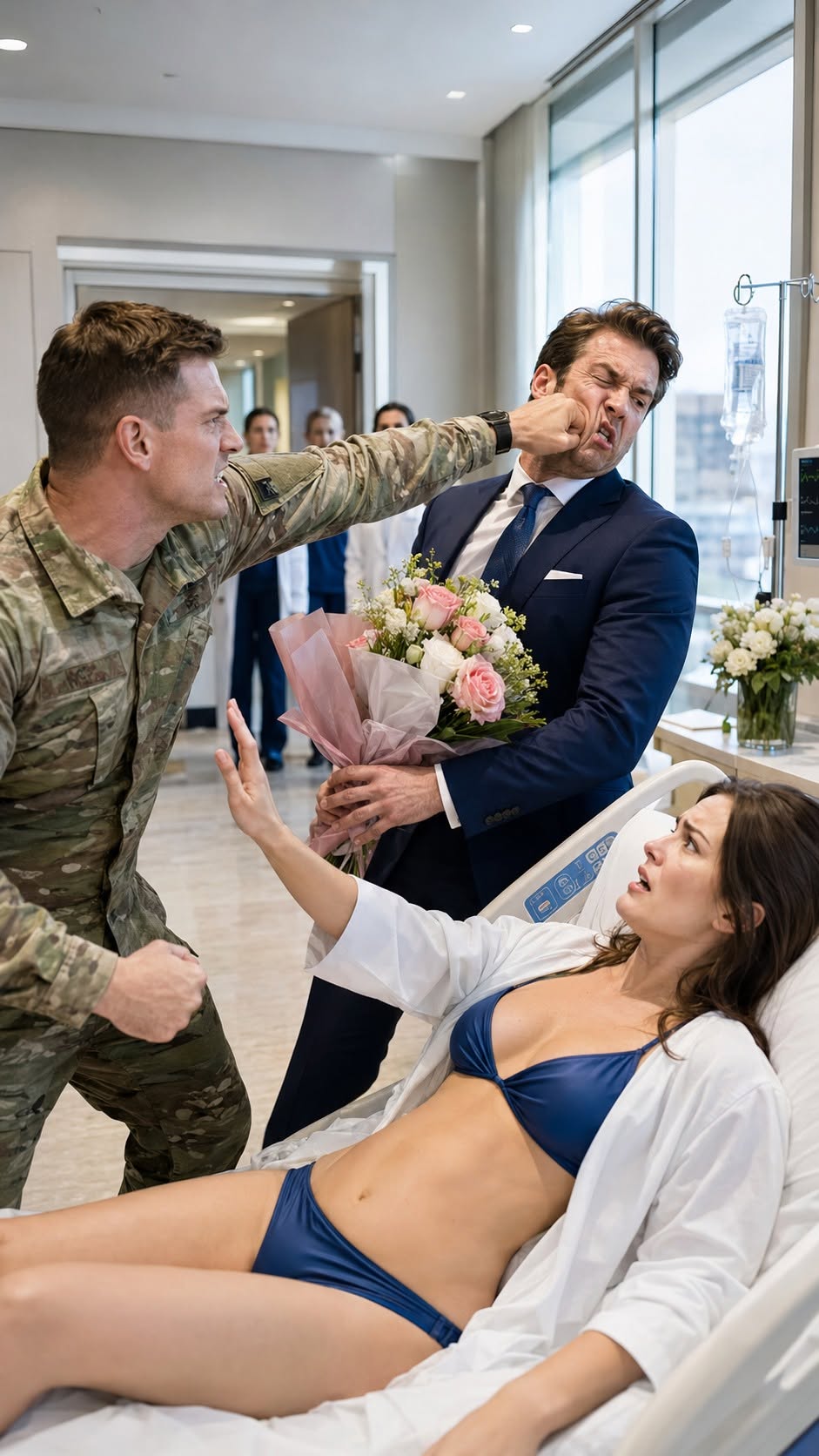
The Architect of Ruin
Chapter 1: The Distance of Dread
I was exactly five thousand miles away from the front porch of my home when the fracture in my universe occurred.
The military transit barracks in which I stood were a masterclass in sensory deprivation—a concrete purgatory filled with the relentless, vibrating hum of heavy diesel generators and the stale scent of recycled air and dusty combat boots. I was in the middle of a deployment transition, exhausted, covered in a fine layer of desert grit, and desperately craving a few hours of uninterrupted sleep.
Then, the satellite phone resting on my tactical crate began to buzz.
When I answered, the voice on the other end was not the crisp, professional tone of a commanding officer. It was a woman, and she was hyperventilating, her words dissolving into jagged sobs. It took me precious seconds to decipher the panic filtering through the encrypted static.
“Is this… is this Blake?” she stammered, her voice thick with unshed tears. “Blake… I’m so sorry. They broke both of your wife’s legs.”
The blood in my veins performed a terrifying alchemy, instantly transmuting into glacial ice. The ambient noise of the barracks faded into a muted, ringing silence. My hand gripped the heavy plastic of the receiver, knuckles turning bone-white.
“What happened to Emily?” My voice was unrecognizable to my own ears—a hollow, metallic rasp.
“She was brought into County Memorial about thirty minutes ago,” the nurse wept, her composure entirely shattered. “Multiple compound fractures. Severe blunt force trauma to the head and ribs. We are prepping her for emergency surgery right now. She’s fading in and out of consciousness, but she just keeps asking for you. She keeps saying your name.”
Before my brain could formulate the next logical question, a harsh, scraping sound echoed through the earpiece. Someone was physically wrestling the phone away from the nurse. I heard a muffled gasp, the clatter of a receiver dropping, and then, a slow, dark chuckle.
It was a laugh I would have recognized in the deepest pits of hell.
Travis Mercer.
“Come do something about it, soldier,” Travis whispered, his voice dripping with a poisonous, intoxicating arrogance. The malice in his tone was palpable, vibrating across oceans and continents. “My father owns the police. You’re nothing here.”
Click.
The connection severed, leaving me staring at the dark digital display of the phone. The silence in my quarters was deafening.
For three agonizing seconds, time stopped. The primal, reptilian part of my brain screamed for immediate violence. It demanded that I shatter the concrete wall with my fists, that I roar until my throat bled, that I call him back and unleash a torrent of threats that would guarantee a bloodbath.
But I did none of those things. I am not a man who operates on impulse. I am a man who builds systems, and when necessary, dismantles them. I knew that any threat I made over a recorded line would immediately be weaponized by his family.
I carefully set the phone down. I took a single, measured breath, compartmentalizing the towering inferno of my rage into a cold, dark box in my mind. Then, I picked the phone back up and dialed my commanding officer’s direct emergency line.
“Sir,” I said, my voice steady, betraying absolutely nothing of the storm inside me. “My wife has been the victim of a critical, targeted assault. I am requesting immediate emergency leave.”
Fourteen hours later, the wheels of a commercial airliner slammed onto the tarmac in Virginia. The transition from the arid heat of my deployment to the damp, suffocating humidity of an American summer was jarring, but I barely registered it. My mind was already three steps ahead, analyzing the battlefield I was about to step onto.
As I exited the sliding glass doors of the arrival terminal, the humid air hit my face. But something else caught my immediate attention.
Parked illegally against the yellow curb, engines idling with a low, menacing purr, were two Harrington County Sheriff’s cruisers. Their lightbars were dark, but their presence was a blaring siren.
A man stepped out of the lead vehicle. It was Deputy Nolan. He moved with a lazy, practiced swagger, his right hand resting far too casually near the grip of his service weapon. He adjusted his aviator sunglasses, shielding his eyes from the glare of the afternoon sun, and looked me up and down.
“Blake Carter?” Nolan asked, though we both knew he had memorized my face hours ago.
“Yes.”
Nolan chewed on a toothpick, shifting his weight. “You need to come with us.”
I stopped a few feet from the cruiser, my duffel bag slung over my shoulder. I didn’t flinch. I didn’t raise my voice. “Need to, Deputy? Am I under arrest?”
Nolan hesitated. It was a micro-expression, a tiny stutter in his manufactured bravado, but it was all the data I needed. It was my first definitive clue that they were operating on thin ice.
“No,” Nolan finally drawled, offering a smile that didn’t reach his eyes. “Sheriff Mercer just wants to have a little conversation with you before you head over to the hospital. Just clearing up some paperwork.”
Sheriff Daniel Mercer was Travis’s father. For twenty-two years, he had ruled Harrington County not as a public servant, but as a feudal lord. He controlled the judges, the zoning boards, and the local press. The locals often joked in hushed, terrified whispers that the gold star on his chest should be replaced with a royal crown.
I looked at Nolan, then at the empty back seat of the cruiser. I knew that getting into a police car without a warrant was a tactical error for a civilian. But I wasn’t acting as a civilian today. I was acting as bait.
“Lead the way,” I said softly, tossing my bag into the trunk and climbing into the steel cage of the cruiser voluntarily. As the doors locked, I knew I was descending straight into the belly of the beast. The only question was who would make it out alive.