PART 1

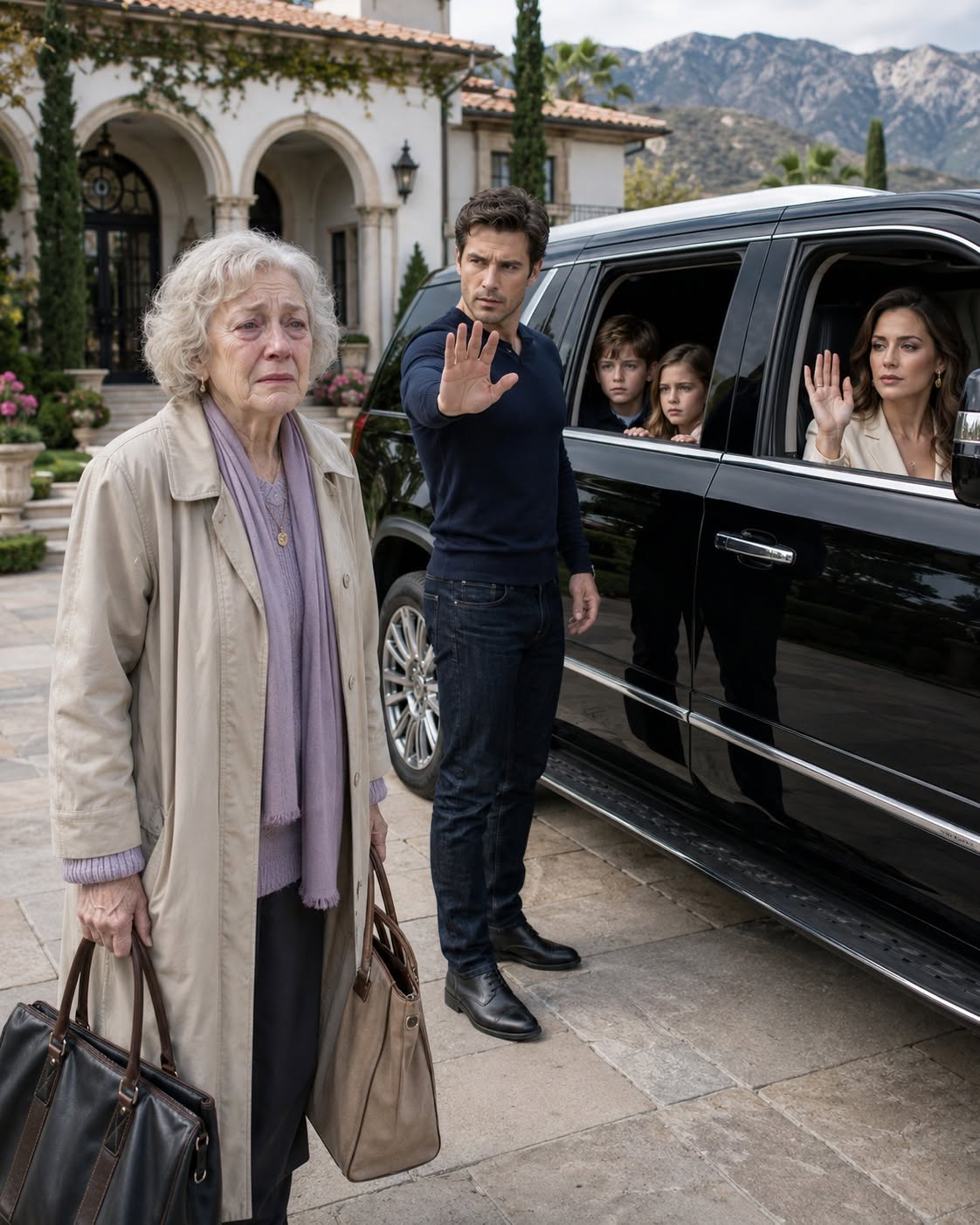
“Mom, there’s no room for you in the car. You’d better stay home and eat whatever’s in the fridge.”
That was what my only son, Richard, said to me while twirling the keys to his SUV in front of my face. His wife, Veronica, was already sitting in the front passenger seat. My grandchildren, Dylan and Chloe, were waiting in the back, buzzing with excitement because they were heading out for an expensive steakhouse dinner in downtown Chicago.
I was wearing a lavender sweater that my late husband, Ernest, had given me on our last birthday together.
“The reservation is only for four, Mrs. Teresa,” Veronica added with a smile that never quite reached her eyes. “Besides, you get tired so easily.”
Dylan let out a quiet giggle.
“And Grandma takes forever to finish eating.”
Chloe kept her eyes glued to her phone, completely ignoring me.
I didn’t argue. At sixty-eight years old, I had grown far too accustomed to smiling whenever something hurt inside.
“Have fun, everyone,” I replied softly.
The SUV backed out of the driveway and sped off without a single one of them looking back.
Five years ago, after Ernest passed away, Richard had convinced me to leave my cozy hometown in Indiana and move into their home in suburban Chicago.
“I don’t want you to be all alone, Mom. We’ll take care of you here.”
I sold the house I had lived in for nearly forty years and handed him $100,000, supposedly to help pay down the mortgage on their new home. I kept only a small, cozy condo back in Indiana that had once belonged to my late sister, along with a modest savings account Ernest had left in my name.
At first, I felt truly loved and welcomed. But slowly, things shifted. I started waking up at five in the morning to prepare breakfasts, pack school lunches, do laundry, cook dinners, and shuttle Dylan back and forth to his after-school activities. Little by little, I also ended up covering utility bills, extra tuition fees, and even funding an authorized credit card that Veronica used “for grocery runs.”
The gratitude vanished completely.
“You live here too, Mrs. Teresa. It’s only natural for you to contribute,” Veronica told me casually one morning.
Richard sat right there at the kitchen table, reading his morning news, pretending he didn’t hear a word.
That evening, after they left me behind for dinner, I walked into my bedroom and pulled out a suitcase I had been secretly packing over the last few days. I packed my ID, my bank statements, the deed to my Indiana condo, and a framed photograph of Ernest.
Then, sitting on the dining room sideboard, I noticed their printed holiday greeting cards.
Every single card featured a glossy family photo of Richard, Veronica, Dylan, and Chloe.
I was nowhere to be seen in any of them.
Suddenly, the landline phone rang.
It was Alice, Ernest’s sister.
“Teresa, oh goodness, it’s so wonderful to hear your voice! I thought you were still in the hospital!”
“Hospital?” I asked, pausing.
There was a long silence on the line.
“Veronica told everyone you’re suffering from severe dementia and that you barely recognize anyone anymore.”
I felt the floor drop out from under my feet.
I walked over to the hallway desk where Veronica kept family paperwork and opened the drawers. Inside, I found a official-looking folder containing a geriatric mental health assessment under my name, alongside a draft application for immediate admittance into a private memory-care facility.
Tucked right behind those documents was a handwritten note from Richard:
“Once Mom is checked into the facility, locate the deed, bank accounts, and legal documents for the Indiana condo.”
And right below it was a scribbled note in Veronica’s handwriting:
“When we sell the condo, we’ll have enough for the down payment on the new vacation property.”
They didn’t want to take care of me.
They were planning to have me declared mentally incompetent, lock me away in an institution, and strip away the absolute last things that still belonged to me.
At that exact second, a push notification popped up on the shared family calendar on my phone. Scheduled for 9:00 AM the very next morning, the entry read:
“Transfer Mom to the memory care facility. Check her room thoroughly before leaving.”
The event had been created directly by Richard.
My own son had scheduled the exact hour and minute he planned to erase me from his life.
And I still couldn’t fathom the dark truth I was about to uncover.
PART 2
That very night, I immediately canceled all automatic bill payments tied to my bank accounts, froze the authorized credit card Veronica used, and called a cab.
As I was walking out the door with my suitcase, my neighbor, Mrs. Gable, stopped me in the driveway. “Mrs. Teresa, are you going somewhere? Veronica said someone from a senior care facility was coming to pick you up early tomorrow morning!”
I didn’t wait another second. I instructed the cab driver to take me straight to the train station and bought a late-night one-way ticket back to Indiana. For the first time in five long years, I sat in a seat meant only for me.
As the train pulled out of the station into the dark night, the text messages started flooding my phone.
“What did you do to the credit card?!”
“We’re at the steakhouse right now and the card just got declined!”
“Where did you hide your bank account binders?!”
“Answer your phone, Mom! People are coming for you tomorrow!”
Not a single one of them asked if I was alright. They only asked about my money.
When I finally unlocked the door to my old Indiana condo, I sat on the couch and cried for the first time. I wanted to give up. But after a few moments, I wiped my tears, opened my suitcase, and carefully reviewed the medical report I had taken from Veronica’s desk.
The document claimed I had been evaluated two weeks prior at a private clinic in Chicago and diagnosed with “severe cognitive decline.”
I had never stepped foot inside that clinic in my life.
Then, a memory flashed through my mind: Veronica had asked to borrow my driver’s license and insurance card for three days under the pretense of “updating family insurance policies.”
First thing the next morning, I called Mr. Andrew Salgado, an estate and elder law attorney I had discreetly consulted a few weeks earlier. He urged me to undergo an immediate, independent medical and psychological evaluation.
Dr. Manuel Herrera, my trusted primary physician of over fifteen years, examined me thoroughly for nearly an hour.
“Teresa, there is not a single sign of cognitive decline here,” Dr. Herrera stated firmly. “You are fully oriented, you remember every detail, you manage your finances flawlessly, and you are completely capable of making your own decisions.”
I walked out of his office with a signed, notarized certificate of mental competence.
Next, Mr. Salgado made a call to the clinic in Chicago. A receptionist confirmed that a woman named “Teresa Mendoza” had indeed been evaluated, accompanied by a younger woman who introduced herself as her daughter.
I didn’t have any daughters.
I asked the receptionist for any physical descriptions listed in the intake notes.
“The patient was wearing a distinctive, dark red wool winter coat.”
My hands turned ice-cold.
Veronica’s mother, Ophelia, was my age, had a similar build, and wore a dark red wool coat every single winter. They had brought Ophelia to the clinic using my stolen identification to impersonate me.
But the worst was yet to come.
Mr. Salgado tracked the paper trail of the $100,000 I had handed over to Richard five years ago. It turned out Richard’s home had been purchased with a high-ratio mortgage that covered almost the entire price of the house. My money had never been applied toward the mortgage at all.
Three days after I had transferred the funds, the entire $100,000 had ended up in a business account belonging to “Valley Real Estate Holdings”—a firm owned by Ophelia’s husband, Veronica’s father. They had recorded the transfer as “consulting fees.”
I had never hired a real estate consultant in my life.
To top it off, I had previously found a recent property valuation in their home trash bin, performed by that exact same real estate firm. The master plan was far bigger than I could have imagined: they had used my life savings to fund Veronica’s parents’ business, and now they were going to lock me away in a facility while quietly selling off my Indiana condo, keeping all the proceeds for themselves.
On Sunday morning, Richard sent me a text message:
“We’re all driving down to Indiana today. Have your financial and property documents ready on the table. It’s time to settle your future.”
I sent back a three-word reply:
“I’ll be waiting.”
They thought they were driving down to corner a defenseless, frail old woman. They had no idea that lined up on my dining room table was an ironclad stack of criminal evidence.
And they certainly didn’t know that Mr. Salgado had just closed off their very last line of escape.
PART 3
At two in the afternoon, Richard’s black SUV pulled up in front of my Indiana condo.
Richard, Veronica, and her parents, Ophelia and her husband, stepped out of the vehicle. They walked up the walkway with cold, confident strides, expecting to find a panicked, confused old woman ready to be ushered off to a memory-care facility.
Richard unlocked the front door using his old spare key and marched straight into the living room without knocking.
“Mom, this ridiculous game ends today!” he announced loudly. “You left the house, you canceled the credit cards, and you embarrassed us at the restaurant!”
He froze mid-step.
Sitting in my living room was not just me.
Beside me sat my attorney, Mr. Andrew Salgado, along with my primary physician, Dr. Manuel Herrera, and a local police detective holding a clipboard.
Spread neatly across my dining room table were bank wire transfers, medical records, property deeds, and high-resolution security camera stills.
Veronica stepped into the foyer behind Richard, her face turning pale the moment her eyes met mine.
“What is this?” Richard stammered, stepping back. “Mom, who are these people?”
“These are the people who are going to help me settle my future, Richard,” I said calmly, taking a sip from my teacup.
Mr. Salgado stood up, opening a legal folder.
“Mr. Mendoza, your mother has undergone a comprehensive, independent psychiatric and medical evaluation,” Mr. Salgado stated in a clear, authoritative tone. “She has been certified completely mentally sound and fully competent. The medical report your wife obtained using stolen identity documents from a Chicago clinic is legally void.”
Ophelia gasped, instinctively clutching the collar of her dark red wool coat—the exact coat recorded in the clinic’s intake files.
The police detective stepped forward. “We have already pulled the security footage from the Chicago clinic’s waiting room from two weeks ago. The video clearly shows Mrs. Ophelia here presenting Mrs. Teresa’s driver’s license at the front desk.”
Ophelia let out a faint shriek, taking two steps back toward the door.
“That’s… that’s a complete misunderstanding!” Veronica blurted out, her voice rising in panic. “We were just trying to get her the care she needs! She’s been forgetting things for months!”
“I haven’t forgotten a single thing, Veronica,” I said, looking her dead in the eye. “Not the $100,000 I gave my son that you funneled directly into your father’s real estate company. Not the authorized credit card you used for your personal shopping sprees. And certainly not the note you wrote planning to sell my condo out from under me after locking me away.”
Richard whipped his head around to look at his wife, his jaw dropping. “Veronica… what is she talking about?”
“Don’t play dumb, Richard!” I interjected firmly. “You created the calendar event to ship me off to an institution at 9:00 AM last Friday. You signed off on every single piece of it!”
Richard’s father-in-law stepped forward, trying to maintain an imposing demeanor. “Listen here, these financial matters are internal family arrangements! The $100,000 was a legitimate business transaction!”
“A business transaction based on grand theft, wire fraud, and elder financial exploitation,” Mr. Salgado corrected him coldly. “We have already submitted the full paper trail to the State Attorney General’s Financial Crimes Division. The $100,000 wire transfer has been formally flagged, and a court order has been issued freezing the business accounts of Valley Real Estate Holdings pending criminal investigation.”
Veronica’s father turned completely white.
“Mom, please!” Richard cried out, dropping to his knees beside my armchair, trying to reach for my hand. “We’re your family! We can fix this! I was just stressed… Veronica told me you were getting sick and that this was the best way to protect your assets!”
I drew my hand back, refusing to let him touch me.
“You left me out of the family dinner because you said there was no room for me in your car,” I said softly, my voice filled with a quiet, unshakeable sorrow. “And then you tried to make sure there was no room for me in the world.”
The detective pulled out a pair of handcuffs.
“Richard Mendoza, Veronica Mendoza, and Ophelia, you are coming with us to the station for questioning regarding identity theft, criminal conspiracy, and elder financial abuse.”
Veronica burst into hysterical tears as the officers guided them toward the door. Richard looked back at me one last time, begging for forgiveness, but I simply turned my face toward the window, watching the cold winter breeze rustle the trees outside.
Six months later, the dust had finally settled.
Under the weight of overwhelming bank records, security footage, and witness testimony, Veronica and her mother entered guilty pleas for identity theft and elder fraud, receiving probation, community service, and heavy financial restitution penalties.
Richard was forced to sell his luxury home to repay every single cent of the $100,000 he had stolen from me, along with covering all of my legal and medical fees. Faced with a ruined reputation and court-ordered restitution, he and Veronica ended up moving into a small rental apartment on the outskirts of town.
As for me, I stayed right in my cozy Indiana condo.
I reconnected with old friends, joined a local gardening club, and spent my quiet afternoons reading on my sun porch. Alice came over every Sunday for coffee, and we filled the home with laughter, warm meals, and fond memories of Ernest.
One sunny afternoon, I sat on my porch, holding a warm cup of tea, looking at a framed photograph of Ernest resting on the side table beside me.
My son had thought he could discard me like an old piece of furniture when he felt I was no longer useful. He thought he could steal my dignity along with my life savings.
He had forgotten that the woman who raised him was far stronger than the mother he had taken for granted.
I took a slow, peaceful breath, feeling a deep sense of calm wash over me.
I hadn’t lost my family that cold January night.
I had simply reclaimed my life.