- Part 1: The Man in the Photograph
- The moment I saw my daughter beside a silver-haired man old enough to be her father, I was ready to call her a gold digger.
- My name is Elena, and I raised Chloe alone. I cleaned houses, worked double shifts, skipped meals, and wore shoes until the soles cracked. Every sacrifice felt worthwhile because Chloe was compassionate and determined to build a better life. When she entered a London nursing program, I sent her away with everything I had managed to save.
- At first, she called every evening, complaining about the cold weather, difficult classes, and deep loneliness. Whenever she feared failure, I reminded her that one exam could never define her future. But after several months, the calls became brief and distracted. Then, out of nowhere, she announced she was returning home.
- A week before her flight, she sent a photograph. She stood on a London pavement beside an older man in an expensive coat, his hand resting gently against her back.
- Before I could reply, Chloe called.
- “Mom, please don’t shout.”
- “What happened?”
- “I got married.”
- “To that man?”
- “Yes. His name is Arthur.”
- I demanded his age.
- “Fifty-six.”
- Chloe was twenty-two.
- I lost control. I accused her of throwing away her future and letting a wealthy older man buy her loyalty. She did not argue; she only asked me to wait until she came home.
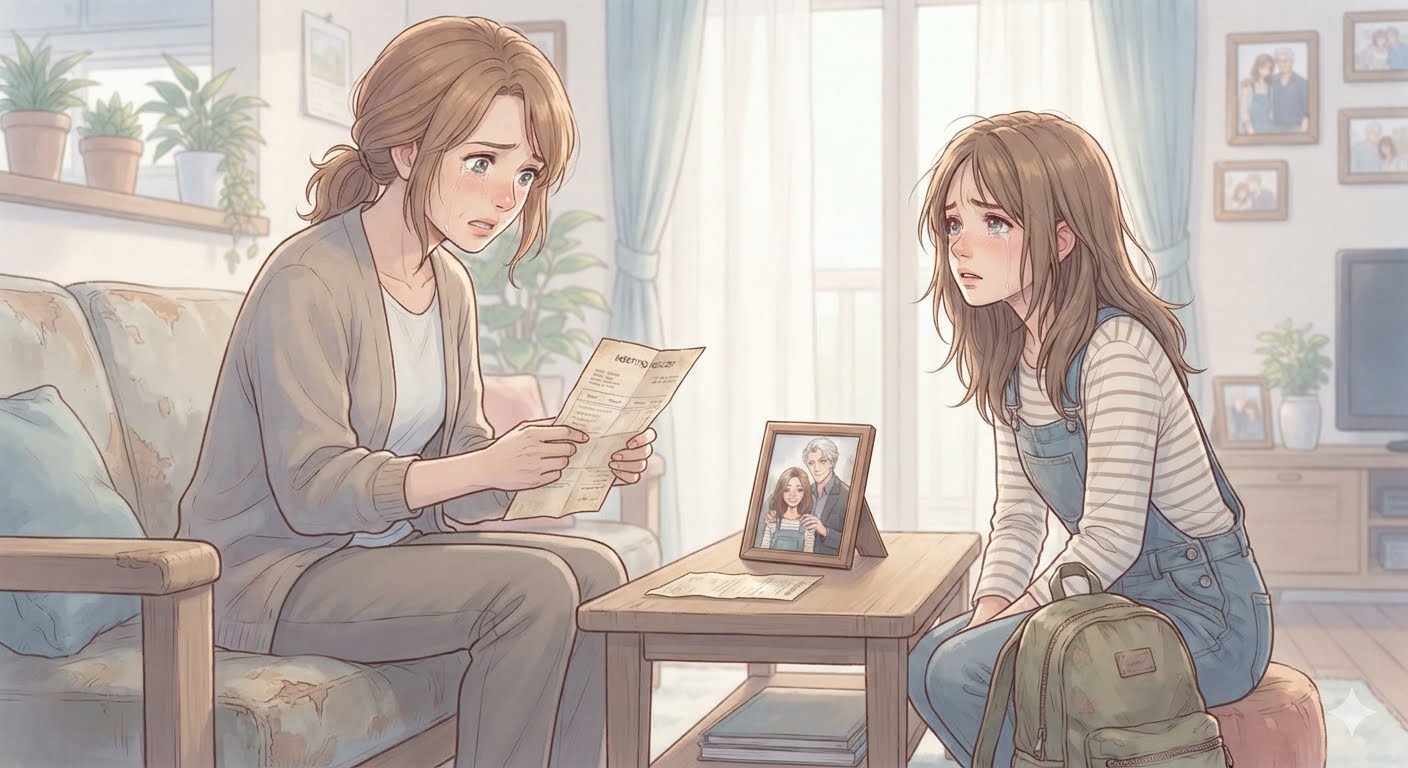
- For a week, I imagined diamonds, luxury apartments, and a daughter who had confused money with love. But when Chloe stepped through the airport gate, none of it matched reality. She wore no expensive jewelry and looked pale, thin, and utterly exhausted.
- At home, I confronted her directly. “Did you marry him for money?”
- Instead of answering, she placed an old hospital receipt on the kitchen table. It came from the hospital where I had received cancer treatment ten years earlier. The payment section read: paid in full by an anonymous donor.
- “Turn it over,” Chloe whispered.
- On the back was a distinctive signature.
- “I saw that signature during my hospital placement,” she said softly. “It belonged to Arthur.”
- Part 2: The Truth About the Marriage
- Chloe explained that Arthur had funded a hospital foundation that quietly paid treatment costs for patients who could not afford them. He had never known my name, but I had been one of the people he saved. The stranger I had thanked in my prayers for ten years was now my daughter’s husband.
- “He saved my life,” I whispered.
- “Yes,” Chloe said. “But that isn’t why I married him.”
- Arthur had late-stage heart failure and three wealthy adult children who wanted total control over his estate, medical decisions, and property. As his health worsened, they tried to have him declared incompetent and moved into a cheap facility with a terrible reputation. Arthur was still mentally sharp, but weak and almost completely alone. His children rarely visited unless lawyers were present.
- Chloe first knew him as a patient. She checked his vital signs and stayed beside him during sleepless nights. While organizing his documents, she recognized the signature from my old receipt. When she told Arthur that the woman he had once helped was her mother, he cried. He remembered my case number and asked only one question: “Did your mother live?”
- When Chloe said yes, he closed his eyes with profound relief.
- By then, Arthur’s children were preparing a competency hearing. His solicitor warned that they might soon control where he lived and how he was treated. Arthur trusted Chloe because she listened while everyone else treated him like an inheritance waiting to be divided.
- Marriage gave her legal standing his children could not easily challenge. After doctors confirmed Arthur understood his choices completely, he married Chloe and granted her power of attorney.
- “You married a dying man to protect him,” I said, the truth settling in.
- “I married a good man so he wouldn’t die surrounded by people waiting for his money.”
- Shame struck me all at once as I remembered every cruel accusation I had thrown at her. Chloe admitted Arthur’s children had called her far worse names, accusing her of manipulation, abuse, and greed. She had stayed silent because the truth was too complicated to explain over the phone.
- I held her in the kitchen where I had once packed her school lunches, and we cried together.
- A week later, I traveled to London. Arthur sat in a wheelchair beside a window, wrapped in a wool blanket. His face was tired, but his mind remained sharp and clear.
- I knelt beside him and tried to thank him for saving my life.
- “You already thanked me,” he said, looking warmly toward Chloe. “You raised her.”
- I stayed for three weeks and watched Chloe manage his medication, speak with doctors, and sit beside him through difficult nights. What existed between them was loyalty, gratitude, respect, and a quiet, profound love.
- Part 3: The Final Battle
- At the court hearing, Arthur’s children arrived in dark suits with polished expressions. Their lawyer argued that Chloe had targeted a wealthy, vulnerable man and pressured him into marriage.
- But Chloe was prepared.
- She presented medical evaluations proving Arthur’s competence, signed directives, recorded statements, and testimony from doctors, nurses, and his solicitor. Every single document showed he understood exactly what he was doing.
- When Chloe spoke, her voice remained completely steady. “I did not isolate Arthur. His family abandoned him long before I entered his life. I protected his decisions after they stopped caring about what he wanted.”
- Then Arthur addressed the court. He spoke slowly, but clearly. His children, he said, discussed his death as though he were already gone; they saw property and bank accounts, while Chloe saw a human being.
- “She did not dishonor me by becoming my wife,” he said firmly. “She became the family I no longer had.”
- Then he faced the judge directly. “I am not confused. I am dying. Those are not the same thing.”
- The petition was dismissed.
- Arthur remained at home, controlled his own medical care, and avoided the facility his children had chosen. He passed away four months later in his own bed, with soft music playing and Chloe and me beside him.
- His final words to me were, “You were worth saving.”
- To Chloe, he said, “Do not let them make you hard.”
- After the funeral, Chloe and I sat silently in the car. Eventually, I asked whether she had truly loved him.
- “Yes,” she said.
- “What kind of love?”
- “The kind you feel for someone who proves goodness can be quiet. The kind you feel for a man who gave me back my mother before he knew either of us. The kind that makes you refuse to let someone die alone.”
- I took her hand and admitted I had been terribly wrong about everything.
- “You were afraid,” she said gently.
- “I was judgmental.”
- “But you learned.”
- I had believed my daughter married a man more than twice her age for money. In reality, she entered a legal battle to protect a dying man’s home, medical choices, and dignity. She defended the stranger who had once saved my life when his own children saw him only as an estate.
- I still regret what I said before learning the truth. Yet shame can change a person when they are brave enough to face it. I sacrificed everything to help Chloe become a nurse, but she became far more than I ever imagined—courageous enough to become family to a man whose own family had failed him.
My 22-Year-Old Daughter Married a Man Twice Her Age – I Thought She Did It for His Money Until She Revealed a Heartbreaking Truth