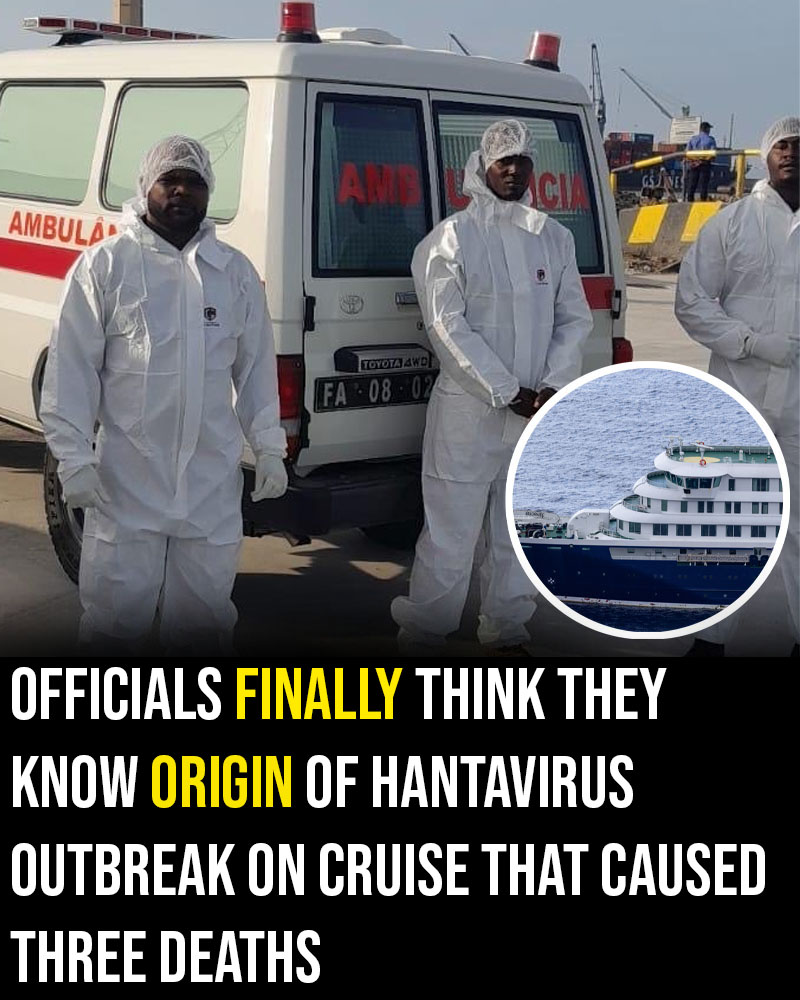
Health officials investigating the deadly hantavirus outbreak aboard a cruise ship now believe they may have identified where the infection began.
Authorities in Argentina suspect the virus may have originated during a birdwatching excursion to a landfill site in Ushuaia – the country’s southernmost region – after several passengers aboard the MV Hondius became infected with the rare illness.
Three passengers died during the ship’s voyage from Argentina to Cape Verde, while more than 150 people were left stranded off the coast of Cape Verde as health officials worked to contain the outbreak. The vessel has since been cleared to dock in the Canary Islands.
According to Argentine officials speaking to the Associated Press, investigators believe a Dutch couple likely contracted the virus while visiting a landfill area in Ushuaia that may have been heavily populated by rodents. Officials suspect the couple then unknowingly brought the infection onboard the ship.
Hantavirus death rate
Health experts confirmed this week that patients linked to the outbreak were infected with the rare “Andes” strain of hantavirus – a variant known to spread between people in close-contact settings.
Hantavirus is typically transmitted through exposure to rodents, including contact with urine, feces, saliva, or airborne particles from dried droppings. According to WHO, “HCPS has a high case fatality rate, commonly between 20% and 40%, making it a disease of major public health concern.”
As fears grow that the outbreak could mirror the early stages of Covid-19, WHO epidemiologist Maria Van Kerkhove said the following during a recent press conference, according to ABC News: “This is not the next Covid, but it is a serious infectious disease. If people get infected, and infections are uncommon, they can die. People on the ship who are hearing this are very scared, rightly so.
“The general public might be scared as well. Accurate information is critical. Knowing what your actual exposure might be – most people will never be exposed to this.”
READ MORE