- Then I married the man who gave it to me.
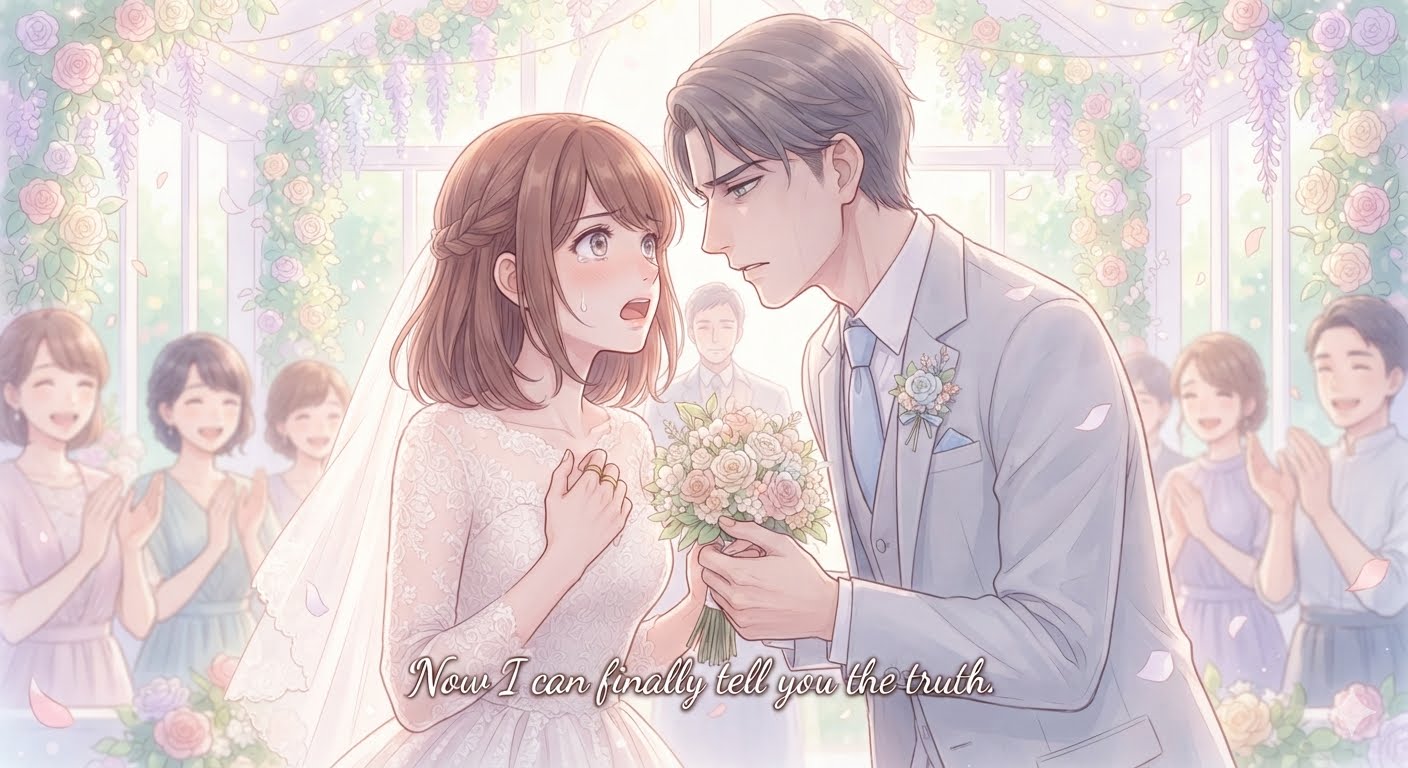
- And only minutes after we exchanged our vows, Nathan leaned down and whispered the one truth he should have confessed long before I ever said yes.
- My kidneys had failed unexpectedly when I was thirty-one. Until then, I had considered myself completely healthy, but overnight my life shrank to fit a calendar of blood tests, dialysis sessions, medication alarms, and sterile hospital waiting rooms. My family rushed to get tested as living donors, but none of them proved compatible.
- Two months into dialysis, my doctor walked into the ward carrying an unexpected file.
- “We found a living donor.”
- I stared at him. “Who?”
- “A man named Nathan.”
- The name meant absolutely nothing to me.
- Three days later, Nathan walked into a hospital conference room holding two hot paper cups.
- “Tea or coffee?” he asked.
- “Coffee. Strong.”
- He handed it to me and pulled out a chair.
- “Why are you doing this?” I demanded directly.
- Nathan offered a small, easy smile. “Nice to meet you, too.”
- “I’m serious. You don’t know me.”
- He explained that a mutual acquaintance named Mara had mentioned my diagnosis. Driven by curiosity, he had gotten tested, discovered he was a match, and decided to proceed with the screening.
- “Thousands of people need kidneys,” I pressed. “Why me?”
- He looked down at his hands. “Because once I knew I could help you, walking away felt like making a conscious choice not to.”
- That was the only explanation he gave.
- Over the following weeks, Nathan completed rounds of psychological evaluations, physical exams, and legal releases. Every stage offered him a clear exit ramp, but he never backed out.
- On the morning of the transplant, he pulled back the curtain to find me silently crying.
- “You’re supposed to be the brave one,” he teased softly.
- “You’re the idiot giving away a kidney,” I muttered, wiping my eyes.
- “One kidney.”
- “Still an idiot.”
- He smiled. “Then you owe me something.”
- “What?”
- “Use it well.”
- The surgery was a complete success. My new kidney began functioning almost immediately, and Nathan recovered fast enough to start irritating me within days. He wandered into my room wearing ridiculous graphic socks, holding a tub of chocolate pudding he wasn’t supposed to be eating.
- “You look terrible,” he noted.
- “You donated an organ, not your manners.”
- “My manners were never medically cleared.”
- After we were discharged, Nathan kept showing up. Sometimes he brought groceries, sometimes books, and once he arrived with a potted fern that I nearly killed within a week.
- “You saved my life, and now you’re giving me homework?” I complained.
- “Keep the plant alive,” he replied. “Consider it physical therapy.”
- Our friendship developed almost accidentally. Having already shared something profound, learning ordinary details felt easy. Soon, I knew how he took his coffee, which movies made him roll his eyes, and how he instinctively stopped to help strangers even when nobody asked.
- Eventually, friendship shifted into something deeper. I realized I wanted Nathan around even when I had no practical reason to need him.
- One rainy evening, standing beneath my apartment awning, he looked at me carefully.
- “You know you can stop thanking me,” he said.
- “I haven’t thanked you today.”
- “Your face has.”
- “Rude.”
- “Accurate.”
- A month after the transplant, Nathan came to my apartment after dark. This time, he brought no groceries, no books, and no teasing jokes.
- “Can I come in?”
- He sat at my kitchen table, staring blankly at the dying fern.
- “What happened?” I asked, my voice dropping.
- “My doctors found something during my post-op follow-up.”
- My stomach dropped. “Because of the donation?”
- “No. Completely unrelated.” He met my eyes. “It’s cancer.”
- During routine post-donation scans, doctors had discovered an aggressive, advanced malignancy. Treatment could potentially extend his life, but no one was using the word cure.
- “How long do you have?”
- “They don’t know.”
- Nathan reached across the small table and took my hand. “I don’t want to spend whatever time I have left alone.”
- “You won’t.”
- He let out a quiet, breathless laugh. “Careful.”
- “I mean it.”
- “So do I.”
- He reached inside his coat pocket and set a small velvet box beside the wilted fern.
- I stared at it. “Nathan…”
- “I know it’s fast.”
- “Fast? You just told me you have terminal cancer, and now you’re proposing?”
- “Probably not my best timing.” He flipped open the box. “Marry me.”
- I stood up and paced toward the sink, trying to clear my head. “Do you actually want a wife, or are you just terrified of dying alone?”
- He flinched. “Both can be true.”
- The brutal honesty of that answer frightened me, but I looked at the man who had freely offered me part of his body before he even knew my full name. Illness had already taught me that life rarely waits for ideal timing.
- “I need one promise,” I told him.
- “Anything.”
- “No lies.”
- Nathan met my gaze firmly. “No lies.”
- I said yes.
- We planned a modest wedding in the garden room of a local bistro. My parents attended, my brother spent the morning complaining about his tie, and Mara started crying long before the music started.
- On the morning of the ceremony, I pulled Nathan aside. “Are we doing this because we’re terrified?”
- He squeezed my fingers tightly. “We’re doing it because we’re scared—and because I love you.”
- The ceremony took less than fifteen minutes, culminating in the officiant pronouncing us husband and wife. As our guests erupted into applause, I turned toward Nathan, expecting to see relief washing over his face.
- Instead, his smile vanished completely.
- He took my hand, pulled me close enough that his voice was lost under the applause, and whispered:
- “Now I can finally tell you the truth.”
- A wave of cold dread rushed through me. “What truth?”
- Nathan glanced toward the exit before looking back at me. “I have a daughter.”
- Part 2
- For several long seconds, my mind refused to process his words.
- “What?”
- “Her name is Sophie,” he said quietly. “She’s twelve.”
- I stared at my new husband, feeling the room tilt. “You have a twelve-year-old daughter, and you waited until after our wedding to tell me?”
- “I was going to tell you sooner—”
- “You swore to me: no lies.”
- “I know.”
- “Where is she?”
- Nathan explained that Sophie lived primarily with her grandmother during the school week, spending weekends and summer stretches with him. Her mother had been largely inconsistent since their divorce years ago.
- “Does Sophie know about me?” I asked.
- “Yes.”
- The realization cut even deeper. “So your daughter knew I existed, but you kept her a complete secret from me?”
- Nathan ran a hand over his face. “She knows about the transplant. She knows we were dating. But she refused to meet you.”
- “Why?”
- “She thinks you’re replacing her.”
- I stepped back, physically putting distance between us. “Am I?”
- “No!”
- “Then why hide her?”
- He confessed that every time he mentioned my name, Sophie retreated into anger and tears. When his cancer diagnosis came, the pressure mounted, and Nathan convinced himself that a “better moment” to introduce us would present itself.
- Except he never found one.
- Then he admitted the rest. “I thought if we were already married, Sophie would see that you weren’t just temporary. That you were really staying.”
- I felt sick. “You used our marriage as a tool to force a resolution with your child?”
- “No! I married you because I love you.”
- “But you also counted on this wedding to trap her into accepting the situation.”
- Nathan went silent, unable to deny it.
- Without another word, I walked out through a side door into the parking lot, still trailing my wedding train. Nathan hurried after me.
- “Claire, please don’t leave like this.”
- I turned, holding up a hand. “Stay right there.”
- “What?”
- “For once in your life, stop deciding how the next scene plays out.”
- He stopped in his tracks.
- “Give me her grandmother’s address,” I demanded.
- His face tightened with anxiety. “She isn’t ready to see you.”
- “You’ve made enough decisions for everyone. Address. Now.”
- Reluctantly, Nathan gave it to me.
- Twenty minutes later, still fully dressed in my bridal gown, I knocked on the door of a quiet suburban home. An older woman answered, taking in the sight of me without much surprise.
- “You must be Claire.”
- “Is Sophie here?”
- “She told me she doesn’t want to talk to you.”
- “I figured.”
- “Nathan called ahead.”
- “Of course he did.”
- The woman’s expression softened slightly. “You can wait on the porch steps if you want.”
- So I sat down on the wooden steps in yards of white silk. Ten minutes passed, then fifteen. Finally, the front door clicked open.
- “This is really weird,” a young voice observed.
- I turned around. Sophie had Nathan’s dark eyes and his exact, guarded expression.
- “Probably,” I admitted.
- She crossed her arms over her chest. “Did you marry my dad because you felt sorry for him?”
- I considered giving her a gentle, reassuring lie, but she deserved better. “His diagnosis rushed things, definitely. But no, I didn’t marry him out of pity.”
- Sophie studied my face carefully. “Then why did he give you part of his body before he even knew who you were?”
- I opened my mouth to explain his altruism, then paused. The pieces suddenly clicked into place. Her anger wasn’t driven by petty jealousy—it was rooted in profound fear.
- “You think your dad keeps giving away pieces of himself to everyone else,” I said softly, “until eventually there won’t be anything left for you.”
- Her defensive posture broke, just for a second.
- “Everyone talks about how amazing he is,” she muttered, looking away.
- “He is amazing in a lot of ways,” I agreed.
- “See?”
- “And you are still completely allowed to be angry at him for it.”
- That caught her off guard. She sat down on the step beside me, her sneakers pulling at the edge of my dress.
- “He fixes everything for everybody,” Sophie said quietly. “Friends, neighbors, strangers. If someone calls at midnight, he’s out the door before they even finish explaining. Everyone tells me how generous my dad is. Nobody ever asks what that generosity costs the people waiting for him at home.”
- I looked down at my simple wedding ring. I had fallen in love with Nathan’s selfless nature because I was the ultimate beneficiary of it. Sophie had spent twelve years dealing with the fallout of being set aside for the sake of his next noble cause.
- “He should have told me about you from day one,” I told her.
- “Obviously.”
- “And he needs to stop managing everyone’s lives and calling it love.”
- Sophie let out a small, bitter snort. “Good luck fixing that.”
- When I returned to the venue, the rest of the guests had cleared out, but my family remained. My parents stood near the empty head table, my brother had unbuttoned his collar, and Mara sat quietly nursing an untouched glass of champagne. Nathan was pacing near the garden doors.
- My mother walked over the moment I entered. “Are you all right?”
- “No.”
- She looked over my shoulder at Nathan. “What is going on?”
- Nathan opened his mouth to explain, but I cut him off instantly. “Tell them yourself.”
- He went pale. “Claire—”
- “You love deciding when people get to know the truth,” I said coldly. “So tell them.”
- Nathan forced himself to face my parents. “I have a twelve-year-old daughter. I married Claire today without telling her she existed.”
- My mother stared at him in utter disbelief. “You let my daughter sign a marriage license without revealing you have a child?”
- “Yes.”
- My father stepped forward, his voice dangerously low. “Why?”
- Nathan swallowed hard. “I told myself I was protecting Sophie. Then I told myself I was protecting Claire. But the truth is… I wanted to make sure nobody had the chance to say no to me.”
- The silence in the room was deafening. No one offered him comfort.
- I walked up to him. “The only way this marriage survives is if that ends today.”
- “If what ends?”
- “You deciding what everyone around you needs, wrapping it up, and calling it love.”
- Nathan closed his eyes, taking a ragged breath. “Sophie said the exact same thing.”
- “Then maybe it’s time you start listening to the women in your life instead of managing them.”
- He nodded slowly, then turned to my parents and brother. “I am so sorry. Not just because Claire found out, but because I took away her right to choose her own life.”
- My mother folded her arms tightly. “Then give it back to her.”
- Nathan turned to me, his hands at his sides. For the first time since I’d met him, he didn’t attempt to guide the conversation or fix the damage.
- “Claire,” he said quietly, “do you want me to pack my things and leave?”
- “No.”
- Relief flashed across his face, but I raised a finger.
- “You aren’t leaving,” I said, “but you are going to learn how to ask before you act.”
- Part 3
- The months following our wedding were far from a seamless fairytale. There was no instant happy family. Sophie continued to call me Claire. She stayed at our apartment twice, then refused to come over for nearly a month. Sometimes she talked openly with me; other times she ignored my presence entirely.
- And I let her set the boundary every single time.
- Nathan began the painful process of unlearning his oldest habits. When chemotherapy schedules conflicted with weekends he had promised to Sophie, he stopped making unilateral executive decisions about what was “best for her schedule.” Instead, he sat down and asked her what she wanted to do—whether she wanted to accompany him to the clinic, reschedule their plans, or spend the time with her grandmother.
- Learning simply to ask was a excruciatingly hard habit for him to build.
- I also stopped letting him take total control over my ongoing medical care. One morning, he reached for my daily prescription organizer out of habit.
- I pulled it back gently. “I can manage my own medication, Nathan.”
- “I know you can.”
- “Then practice acting like it.”
- A faint smile crossed his face. “Fair enough.”
- His cancer treatment was an exhausting, unpredictable rollercoaster. Certain scans offered genuine glimmers of hope; others raised alarming new complications. The oncology team never removed the word terminal from his chart, and we were never granted enough certainty to pretend we had decades left.
- Yet, Nathan slowly stopped using life’s uncertainty as a license to dictate everything around him. He began to grasp that helping someone doesn’t mean taking over their life, that true generosity sometimes means allowing others to make choices you disagree with, and that listening to a daughter’s anger without trying to cure it is a deeper form of love than constantly trying to be a hero.
- By the following summer, the three of us returned to the very same garden where Nathan and I had exchanged our vows. There was no grand ceremony this time—just a simple afternoon picnic.
- Sophie walked up to the picnic table carrying two poorly wrapped gift boxes. She handed the first one to me.
- I pulled off the paper to reveal a cheap ceramic mug printed with the words:
- WORLD’S MOST COMPLICATED STEPMOM.
- I burst out laughing. Nathan started laughing too, but Sophie immediately pointed a finger at him.
- “Don’t get smug, Dad. Yours is worse.”
- Nathan unwrapped his box. His mug read:
- ASK YOUR FAMILY FIRST.
- He let out a dramatic groan. “Fair.”
- “Extremely fair,” Sophie countered, snatching a strawberry off his plate.
- I leaned back against Nathan’s shoulder, watching the two of them banter over dessert.
- A year ago, Nathan had entered my life operating on a singular rule: if you have the power to fix a problem, you have a duty to do it. That instinct had literally saved my life, but left unchecked, it was also his most destructive flaw. He had spent his adult life believing that loving people meant managing their burdens, shielding them from painful facts, and making executive choices on their behalf.
- Sophie had suffered because of it. I had suffered because of it too.
- The kidney had never been the issue. His desire to give was never the issue. The flaw was believing that sacrificing a piece of yourself gives you the moral authority to control what happens next.
- Nathan finally understood the distinction.
- Sophie still got frustrated with him sometimes. So did I. Trust wasn’t restored by the mere existence of a marriage certificate; it was rebuilt through hundreds of ordinary, quiet moments when Nathan caught himself before making a decision for us and simply asked what we wanted instead.
- Sitting in the garden that afternoon, Nathan looked down at his mug, then at Sophie, and finally at me.
- For once, there was nothing to fix. Nobody needed rescuing. Nobody was being kept in the dark. He didn’t need to donate a part of himself, arrange an outcome, or save the day.
- He was just sitting there, fully present with his family.
- And for the first time since the day we met, I think Nathan finally understood that real love isn’t about constantly offering up pieces of yourself to solve the world—sometimes, love is just staying still long enough to let the people you care about have a voice.
Part 1 A year earlier, I thought receiving a kidney from a complete stranger would be the most unbelievable thing that ever happened to me.