- ### Part 1
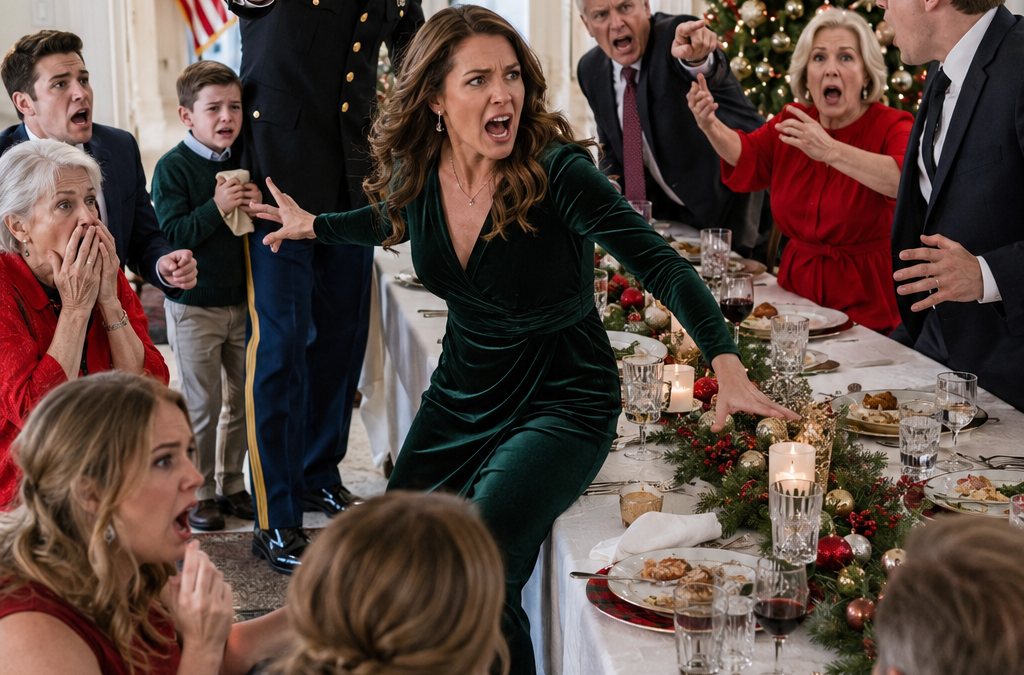
- The sound of my brother’s hand striking my six-year-old son cut through the dining room so sharply that even the Christmas music seemed to stop. Evan froze beside me, one hand pressed to his cheek, his eyes enormous with confusion before the tears came. Across the table, my older brother, Grant, stood with water dripping from the front of his expensive jacket. “He’s an unruly child who needed to be taught a lesson,” Grant said.
- For one stunned second, I thought my mother would scream at him. Instead, she laughed. My father gave a short clap and said, “Maybe now he’ll learn to behave at the table.” Then my aunt nodded as if a grown man striking a first-grader over spilled water was somehow reasonable. I could smell roasted rosemary, candle wax, and the sharp wine Grant had knocked over while jumping to his feet. The crystal chandelier above us glittered over smiling faces I suddenly didn’t recognize.
- Evan had only been trying to show his father a drawing. My husband, Daniel, had returned from a long overseas military assignment two days earlier. Evan had spent months counting the days on a paper chain taped beside his bed. Since Daniel came home, our son had barely let go of his sleeve. The drawing showed the three of us holding hands under a crooked American flag.
- That was what had caused the spill. Evan had leaned toward Daniel, his elbow caught his water glass, and half a cup splashed into Grant’s lap. An accident. Nothing more. But Grant had always believed any inconvenience done to him was an insult.
- Growing up, he had been my parents’ favorite—the charming son, the future of the family company, the person whose mistakes were renamed “ambition.” I was Claire, the quieter younger daughter who was expected to smile, accommodate, and never embarrass anyone. My marriage had offended them from the beginning. Daniel didn’t come from their world of country clubs, private boards, and inherited money. He had built his career through discipline, and his job kept him away more often than any of us liked. My parents treated that absence like proof he had somehow failed us.
- That Christmas dinner had been their idea. “Family is family,” Mom had said when she insisted we attend. Now I watched that same woman smile while my son cried.
- I pushed back my chair so quickly it struck the wall. Before I could reach Grant, another chair moved. Slowly. Deliberately. Daniel stood. He was still wearing the dark sweater Evan had picked out for him that morning. Nothing about him looked dramatic, yet the room changed immediately.
- He looked first at Evan. Then at Grant.
- “Get out,” Daniel said.
- Grant blinked. “Excuse me?”
- “Get out.”
- Dad scoffed. “Daniel, don’t turn this into one of your command-room performances.”
- Daniel never looked at him. Grant’s face reddened. “This isn’t your house.”
- “No,” Daniel said calmly. “But that is my son.”
- The laughter died. I had seen Daniel angry before, but this was different. No shouting. No threats. Just a terrifying stillness. I lifted Evan into my arms. His little fingers curled into my sweater.
- Grant glanced at our parents, waiting for them to rescue him like they always had. Mom finally stood. “Claire, control your husband.”
- Something inside me snapped cleanly in two.
- “No,” I said. “For once, you control your son.”
- Silence.
- Grant grabbed his jacket from the chair and stormed toward the foyer, muttering that we were insane. Dad shouted after him, then turned on us. “You’re ruining Christmas!”
- I looked at the untouched dinner, the glittering table, and my child hiding his face against my shoulder.
- “No,” I said. “You did that.”
- We left without dessert, gifts, or goodbyes. By the time Daniel started the car, my phone was already vibrating. The first message was from Mom. The second was from Dad. The third was from Grant.
- And before we reached the end of their driveway, I saw the sentence that told me Christmas dinner had only been the beginning.
- Dad had written: “Apologize, or you’ll find out exactly how expensive loyalty can be.”
- ### Part 2
- For the first twenty-four hours after Christmas dinner, I didn’t answer anyone. I stayed home with Evan. His cheek was no longer red by morning, but the emotional bruise was harder to measure. He asked me twice whether spilling water made him “bad.” Each time, Daniel crouched until they were eye level and said, “Accidents don’t make you bad. Grown-ups are responsible for controlling themselves.”
- That sentence mattered more to me than any apology my family could have offered. Not that they offered one. By noon, my phone looked possessed. Mom sent paragraphs about “respect.” Dad called seven times. Grant left a voice message saying Daniel had humiliated him in his own parents’ home and that I was raising Evan to be weak.
- Then the tone changed. An email arrived from Dad with the subject line: FAMILY BUSINESS.
- I still owned a minority interest in Whitmore Development, the company my grandfather had built and my father later handed to Grant to run. I didn’t work there day to day, but shares had been placed in my name years earlier. Dad reminded me of that as if he were reminding me who owned me.
- “If you continue supporting Daniel’s behavior,” he wrote, “I will take steps to remove you from all future family benefits, including inheritance considerations.”
- Then came the sentence that made me sit straighter.
- “You should also remember that your financial position is more connected to the company than you seem to understand.”
- I read it twice.
- “What does that mean?” Daniel asked.
- “I don’t know.”
- That bothered him. It bothered me more. For years, I had signed routine partnership documents when the company’s accountant sent them over. Annual consents. Disclosures. Tax forms. Grant always presented everything as administrative housekeeping. I had trusted them because they were my family.
- That night, Daniel made coffee while I pulled old folders from the locked cabinet in our home office. The room smelled like paper and dusty cardboard. Outside, rain ticked against the window. One folder was thinner than I remembered. I found tax statements, partnership notices, and several loan summaries I had never seen before.
- My name appeared beside debts large enough to make my stomach tighten.
- “Did you sign these?” Daniel asked.
- “I don’t think so.”
- He didn’t tell me what to do. He simply said, “Then don’t guess. Get a lawyer who can verify it.”
- The next morning, I called an independent business attorney named Rebecca Sloan. I expected her to tell me I was overreacting. Instead, after reviewing the documents I had, she became very quiet.
- “Claire,” she said, “do not confront your family about these papers yet.”
- My fingers tightened around the phone. “Why?”
- “Because if these signatures are not yours, this is no longer a family disagreement.”
- She asked for copies of every partnership record I possessed and told me, as an owner, I could formally request company records through proper legal channels. We did.
- Grant responded within three hours. Not through an attorney. Directly to me.
- “You have no idea what you’re doing,” his text read. “Drop this before you hurt yourself.”
- That was the moment fear turned into certainty. People with nothing to hide usually ask what you found. Grant already seemed to know.
- Two days later, Rebecca called me into her office. A stack of documents sat on her conference table, marked with colored tabs. She slid one page toward me. It was a loan guarantee. My printed name was beneath it.
- So was a signature that looked almost exactly like mine.
- Almost.
- Rebecca tapped a date near the bottom. “Where were you on March 14 two years ago?”
- I stared at it. Then I remembered.
- I had been in another state, sitting beside Daniel’s hospital bed after a training accident.
- Rebecca opened a second file. Then a third. My name appeared on all of them.
- And every one carried the same small handwriting mistake I had stopped making years earlier.
- Someone had not merely signed my name.
- Someone had practiced it.
- ### Part 3
- The first thing I felt was embarrassment. Not anger. Embarrassment. I sat in Rebecca’s office staring at those signatures and wondering how many times I had defended my family to Daniel. How many times I had said, “They’re difficult, but they’d never actually hurt me.”
- Rebecca didn’t let me stay in that thought for long. “We need facts,” she said.
- A forensic document examiner compared the signatures with verified samples. The conclusion was preliminary but clear enough: several guarantees had likely not been signed by me. Then the financial review widened.
- Because my ownership interest had apparently been pledged as collateral, Rebecca brought in a forensic accountant. We requested records through lawful partnership procedures, and the company resisted almost every step. That resistance produced more questions.
- Grant called me repeatedly. I blocked him.
- Dad tried a different approach. He came to our house.
- When I opened the door, he stood on the porch in a charcoal overcoat, jaw tight, carrying the same leather briefcase he had taken to work since I was a teenager.
- “You’re making a catastrophic mistake,” he said.
- Behind me, I heard Evan laughing at a cartoon in the living room. I stepped outside and shut the door.
- “You threatened me first.”
- “I was angry.”
- “You threatened my financial security because I wouldn’t apologize to the man who hit my child.”
- His face twitched. “Grant lost his temper.”
- “So did you. With an email.”
- Dad lowered his voice. “Your brother has obligations you don’t understand. The company has obligations. If you keep digging, innocent people could get hurt.”
- There it was again. Not “You’re wrong.” Not “Nothing happened.” Just stop looking.
- “What obligations?” I asked.
- He stared at me for several seconds. Then he said, “Family protects family.”
- I almost laughed.
- “Where was that rule when Evan needed protection?”
- He left without answering.
- The review continued. At first, the irregularities looked like aggressive borrowing. Then the accountant found money moving through related entities with vague descriptions. Payments were being shifted to cover other payments. Some company expenses had no clear business purpose.
- Grant had also used loans tied partly to my ownership stake to cover private losses he had concealed from everyone outside a small circle. Rebecca warned me not to jump to conclusions about criminal liability. Evidence had to be documented, not dramatized.
- So we documented everything.
- Dates. Accounts. Signatures. Authorizations.
- The deeper we went, the worse it became.
- One evening, I was at the kitchen island while Daniel helped Evan build a cardboard fort in the living room. Christmas decorations were still hanging, but the holiday felt months away.
- Rebecca called.
- “We found something bigger,” she said.
- I walked into the pantry and closed the door.
- The accountant had identified discrepancies involving tax reporting and contracts connected to federally funded projects. There were invoices that did not align with internal records and certifications that appeared inconsistent with the company’s actual books.
- My mouth went dry.
- “Did Grant do this?”
- “We don’t know everything yet,” she said. “But we know enough that you need separate counsel protecting you personally.”
- I leaned against a shelf of cereal boxes and canned soup.
- My father’s threat returned to me.
- Your financial position is more connected to the company than you seem to understand.
- Maybe he hadn’t been warning me about inheritance. Maybe he had been warning me that my name was already buried inside whatever they had done.
- That night I hardly slept. At 2:13 a.m., I went downstairs for water and found Daniel sitting at the kitchen table.
- He looked at me and said, “You’re thinking about backing off.”
- “I’m thinking about what happens if I don’t.”
- He nodded. “And what happens if you do?”
- I knew the answer.
- If I stopped, they kept my name attached to their secrets.
- The next morning, Rebecca forwarded one newly recovered internal email. It was from Grant to my father.
- The subject line was only three words:
- “Claire won’t notice.”
- ### Part 4
- I read Grant’s email until the words blurred.
- Claire won’t notice.
- Below that subject line was a discussion about paperwork connected to one of the loans. My father’s reply was short enough to make it worse.
- “Handle it.”
- There was no dramatic confession. No sentence that explained every scheme. There didn’t need to be. The dates matched. The amounts matched. And attached to that email chain was a document carrying my false signature.
- For the first time, I stopped thinking of myself as the daughter who had been treated unfairly. I was a business owner whose identity had been used without permission.
- Rebecca helped me make formal reports to the appropriate authorities and financial institutions. We provided documents, not accusations, and let investigators determine what laws had been broken.
- Once outside scrutiny began, the company changed almost overnight. Grant stopped texting. Dad stopped threatening.
- Mom started begging.
- She left a voicemail saying, “Whatever happened with those papers can be fixed inside the family.”
- I deleted it.
- Then she sent a message about Evan.
- “He shouldn’t lose his grandparents over one unfortunate Christmas moment.”
- That one made me furious.
- One moment? The slap had lasted one second. The laughter afterward had told me everything.
- I replied only once.
- “Evan did not lose safe grandparents. He learned which adults were not safe for him.”
- Then I blocked her too.
- Within weeks, auditors and investigators began requesting records independently of me. Lenders reviewed guarantees. Business partners asked questions. Projects were paused.
- Grant’s reputation, which had always seemed polished like the glass walls of his downtown office, began cracking in public.
- The company’s problems were not caused by my report. They were revealed by it.
- That distinction mattered to me because my extended family tried hard to erase it. My aunt emailed, “I hope destroying your parents was worth it.” A cousin accused Daniel of manipulating me. Another relative said I should have “handled things privately.”
- I saved the messages in a folder and never responded.
- Meanwhile, our house grew quieter in a good way. Evan stopped asking whether he was bad. He started drawing again.
- One afternoon, he handed Daniel another picture. This one showed three people standing beside a small house with a huge sun over it.
- “No fancy dining room?” I asked.
- Evan shook his head seriously. “This house is happier.”
- I had to look away for a second.
- The legal process moved slower than family gossip. Months passed before charges and civil claims began taking shape. Investigators concluded that Grant had concealed major personal losses, falsified documents, and participated in financial misconduct that reached far beyond me. My father’s role also came under scrutiny.
- The family business, already strained by debt and frozen relationships with lenders, began selling assets.
- Then came the estate.
- The enormous house where Christmas dinner had happened went on the market.
- Mom called from an unfamiliar number. I answered before realizing it was her.
- “Claire,” she whispered, “they’re making us sell the house.”
- I felt less satisfaction than I expected. Mostly I felt tired.
- She continued, “Your father is devastated. Grant’s life is ruined. Is this really what you wanted?”
- I looked through our kitchen window. Daniel was outside helping Evan ride his bike down the driveway.
- “What I wanted,” I said, “was for my brother not to hit my child.”
- Mom began crying.
- “And after that?”
- “I wanted you to care that he did.”
- She had no answer.
- Eventually she said, “We can still be a family.”
- I thought of the clapping. The laughter. The threats. The forged signature.
- “No,” I said. “We can be related. That’s all.”
- I ended the call.
- A few months later, Grant accepted responsibility in court for serious financial crimes after the evidence against him became overwhelming. His sentence included prison time and restitution. My parents lost much of what they had spent decades using as proof of their importance.
- But one question remained for me.
- What was I supposed to do with the part of myself that had spent thirty-one years begging those people to choose me?
- ### Part 5
- The answer came slowly.
- I stopped asking.
- A year after that Christmas, our decorations looked nothing like my parents’ old display. We had mismatched ornaments, a crooked paper star Evan made at school, and lights Daniel had hung unevenly around the front window.
- It was perfect.
- The legal mess was not magically gone. My attorneys were still untangling my ownership interest and clearing obligations created through forged documents. Some money was lost forever. Some relationships were too.
- But I no longer woke up afraid of disappointing my parents.
- That freedom was worth more than an inheritance.
- Grant wrote to me once from prison. The envelope sat unopened on my desk for three days.
- When I finally read the letter, he apologized for “how Christmas got out of hand.” He wrote about pressure, financial losses, expectations, and how Dad had always demanded he keep the company successful.
- He said he had been jealous of me.
- According to him, I had escaped the family business and built a life that did not depend on our father’s approval. He claimed he hadn’t understood that until everything collapsed.
- Near the end, he wrote, “I hope someday you can forgive me and let me know my nephew.”
- I folded the letter.
- Daniel asked if I wanted to answer.
- “Yes,” I said.
- My reply was three sentences.
- “I understand that you regret the consequences. I also remember what you chose to do. You will not have access to my son.”
- I did not write about forgiveness.
- I had spent too many years believing forgiveness meant reopening a door.
- For me, it didn’t.
- I could let go of the daily anger without pretending Grant was safe. I could stop wishing harm on my parents without inviting them back into our lives. I could accept that they were human beings with failures and fears while still refusing to let those failures become Evan’s childhood.
- Mom sent birthday cards. Dad sent one email through an attorney asking whether I would consider a private reconciliation.
- I declined.
- No dramatic confrontation. No final speech.
- Just no.
- That was the part my family never understood. They had always believed power meant making someone submit—through money, shame, status, or fear.
- I learned that sometimes power is simply becoming unreachable to people who once controlled your emotions.
- Daniel eventually returned to his regular duties, but we became much more deliberate about family time. When he was away, Evan and I had Friday pizza nights. When he was home, he coached soccer badly but enthusiastically.
- I also stopped being a silent figure in my own professional life.
- After separating my finances from the remains of the family company, I used my experience to join a small real-estate consulting partnership with two people I trusted. Nothing about it was glamorous.
- That was one reason I loved it.
- Nobody cared what table I sat at. Nobody measured love in inheritance.
- The following Christmas, Evan knocked over his milk during dinner.
- The glass tipped, milk ran across the table, and he froze.
- For half a second, I saw the memory return to his face.
- Daniel grabbed a towel. I grabbed another.
- Then Daniel smiled and said, “Well, buddy, looks like the table was thirsty.”
- Evan stared at him.
- Then he laughed.
- I laughed too.
- We wiped up the mess and kept eating.
- That ordinary little moment broke my heart in the best possible way.
- Later, after Evan went to bed, I stood beside the tree with Daniel and listened to the soft hum of the heater.
- “Do you miss them?” he asked.
- I thought carefully.
- “I miss who I kept hoping they would become.”
- That was different from missing who they actually were.
- My parents had lost their estate. Grant had lost his freedom.
- But the real ending of our story wasn’t their punishment.
- It was that they finally lost the power to define my worth.
- And my son would grow up knowing something I had needed thirty-one years to learn:
- Family is not the people who demand your loyalty after hurting you.
- Family is the people who make you feel safe enough to spill the water.
- THE END!
My Brother Slapped My Son At Christmas Dinner And Called Him “An Unruly Child.” Everyone Clapped And Laughed Along. But Then My Military Commander Husband Stood Up, Looked Him Dead In The Eye, And Said, “Get Out.” Their Faces Froze In Shock.