- The sound system carried my words to the farthest corners of the ballroom. Evan stood several feet away, pale and motionless beneath the warm lights. Diane’s polished posture had evaporated, Brielle looked ready to bolt for the nearest exit, and Thomas simply closed his eyes.
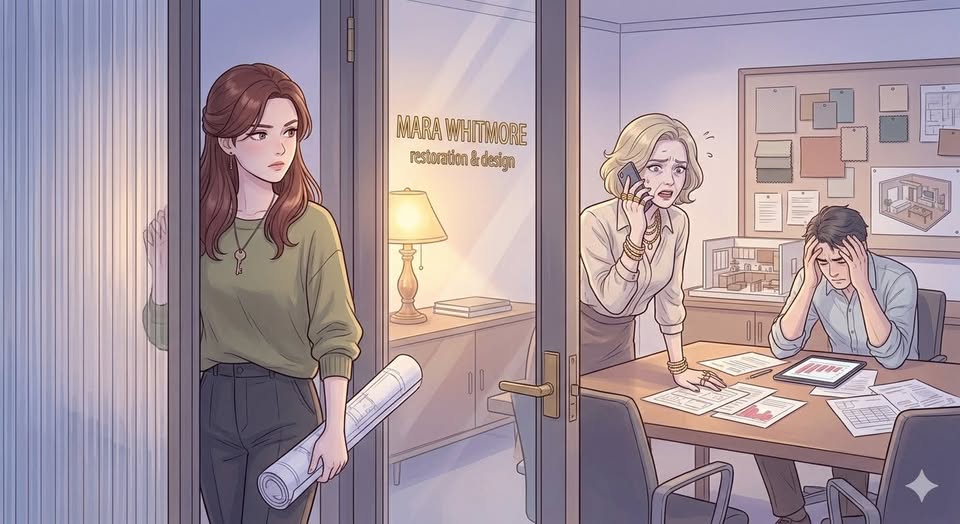
- I turned my focus directly to Diane. “Three weeks ago, I overheard you on the phone outside the main conference room at my studio.”
- Her lips pressed into a tight line.
- “You were pleading with someone for a time extension.”
- The entire room fell into a tense, heavy silence.
- “You assured that person the debt would be taken care of after the wedding.”
- Evan turned to his mother, a look of genuine confusion crossing his face for the first time all evening.
- Then I repeated the exact sentence I had carried with me every single day since: “You said, ‘She owns two condos free and clear. That’s enough to cover everything.’”
- Diane’s face turned a mottled, blotchy red.
- “What debt?” a guest called out from a table near the front.
- Another voice chimed in, “Are you out of your mind?”
- Diane took an aggressive step toward me. “You completely misunderstood.”
- “Then explain it to everyone right now.”
- “It was a private matter!”
- “You made my real estate part of it.”
- She had no answer.
- Thomas lowered his head into his hands, while Evan kept looking between his mother and me as if desperately waiting for someone to construct a reality where he wasn’t responsible.
- I was done waiting for him to grow up.
- “The wedding is officially canceled.”
- The words came effortlessly. Almost shockingly so.
- A collective gasp rippled through the audience. Evan’s eyes went wide. “Mara—”
- I raised a single hand. “And because two employees at my firm used their positions to put financial pressure on me and target my personal assets, their employment is terminated effective immediately.”
- Diane gaped at me. “What are you talking about?”
- “You and Evan are fired.”
- Brielle let out a sharp, shrill laugh. “You can’t fire someone at their own wedding!”
- “Actually,” I replied, “this isn’t his wedding anymore.”
- A couple of guests let out involuntary snorts before quickly catching themselves.
- I reached down and pulled my phone from the hidden pocket sewn into my gown—a small detail that had amused my seamstress, but proved far more useful than the veil. I tapped out a single text. Across the room, Nora checked her screen and gave me a firm, decisive nod.
- Confirmed.
- “Both corporate cards assigned to Evan and Diane have been frozen.”
- Diane looked utterly stunned. “You blocked my account?”
- “The company’s account.”
- “That card is how I pay for—”
- “Company expenses,” I cut in. “Which is why you won’t be needing it now that you no longer work for me.”
- She went completely silent. That silence said more than any confession ever could.
- Evan stepped closer, his voice dropping to a desperate whisper. “Please. Mara, please.”
- He didn’t sound angry; he sounded terrified. “We can fix this.”
- “Fix what, exactly?”
- “All of it.”
- “Your mother demanding my real estate?”
- “Yes.”
- “Your mother running personal charges through my corporate accounts?”
- He darted a quick look at Diane.
- “My attempt to find out if either of you ever actually respected me?”
- “Mara—”
- “Or the legal document you personally handed me during my fitting?”
- He swallowed hard. “I didn’t fully understand what it was.”
- That lie was somehow more insulting than the first. “You brought me a legal document and asked me to sign it without bothering to understand it?”
- “I trusted my mother.”
- I almost felt a flicker of pity for him. Almost.
- “You trusted her with my property.”
- He looked deeply hurt by the distinction, which told me everything I needed to know.
- I pulled the microphone away from my face. Speaking to him alone, I said, “Maybe you didn’t know every single dollar she owed. Maybe you didn’t know every detail of her scheme. But you knew enough to help her. And every single time you had to choose between asking an uncomfortable question and keeping your own comfort, you chose comfort.”
- His eyes welled with tears. Three years ago, that look would have broken my heart. Today, I felt nothing.
- Brielle came storming over, her face twisted in rage. “You set us up! You planned this whole thing!”
- “No.”
- “You waited until tonight just to humiliate our family!”
- “I waited until tonight because your mother chose tonight to threaten me in front of a room full of witnesses.”
- “You could have called off the engagement last week!”
- “I could have.”
- “Then why didn’t you?”
- I looked straight past her at Diane. “Because when someone is using my business and attempting to seize my real estate, I don’t give them a head start to work out a backup plan.”
- That shut Brielle down instantly.
- I braced for Diane to explode, but what happened next was even more unexpected.
- Thomas stood up. Slowly, painfully, he removed his glasses. “She’s right.”
- Diane whipped around. “What?”
- Thomas looked utterly exhausted, but relieved. “We did this.”
- “Thomas, sit down!”
- “No.” His voice wasn’t loud, but it cut through the room clearly. “I co-signed the loan.”
- The ballroom went deathly quiet once more. Diane’s face drained of color.
- Thomas continued, looking at his son. “She got into an investment last year. Far more money than we had.”
- Evan stared at his father. “You knew about this?”
- “I signed the paperwork.”
- “Why didn’t you tell me?”
- Thomas offered a dry, sad laugh. “Because in our family, we stay quiet whenever speaking the truth might cause a fight.” He paused, the words clearly directed at himself. “The investment failed completely. The debt kept piling up, and Diane kept promising she had a plan to handle it.”
- He turned to look at me. “Eventually, I realized what that plan was.”
- Diane snapped, “I was trying to protect our house!”
- “By taking hers?” Thomas pointed directly at me. “That’s not protecting anything. That’s stealing from someone else’s life.”
- For the first time all night, Diane had no reply.
- When she turned back to me, her anger had collapsed into desperate pleading. “I panicked, Mara.”
- I remained silent.
- “You don’t know what it feels like to watch everything you’ve ever built slip away.”
- That finally ignited a spark of anger in me. “I know exactly what that feels like.”
- She blinked.
- “Which is why I’m not going to let you do it to me.”
- I handed the microphone back to the DJ. “My apologies to everyone who came expecting a celebration. The dinner is paid for, and the band is booked through midnight. Enjoy the evening if you like.”
- Someone in the back burst out laughing, followed by an actual smattering of applause. Diane looked as though she had been physically struck.
- I turned and walked toward the exit, where Nora was waiting. I had almost reached the corridor when a woman’s voice called out to me.
- “Ms. Whitmore?”
- I stopped and turned. A middle-aged woman in a structured navy suit stood near the doors holding a leather briefcase. She looked completely out of place among the floral arrangements and formalwear.
- “Yes?”
- “My name is Helen Carver. I’m a representative with the credit union managing Mrs. Mercer’s outstanding loan.”
- Diane appeared right behind us, her face instant terror. Real, unfiltered fear.
- Helen glanced at her briefly before turning back to me. “I came here tonight because our fraud prevention unit uncovered something unusual this afternoon. Given what I just overheard in there, I felt you needed to know right away.”
- Nora stepped up beside me. “What did you uncover?”
- Helen opened her briefcase and pulled out a document. “One of your properties—the Lakeshore condo—was listed as supplemental collateral on Mrs. Mercer’s loan approximately two months ago.”
- For the first time all evening, the air caught in my throat. “That’s impossible.”
- “We suspect there was an issue with the authorization documents.”
- “What authorization?”
- Helen pulled a page from the folder. “A power of attorney form.”
- I stared down at the signature line. The handwriting looked like mine. Almost.
- My stomach churned. “I never signed this.”
- “We had a feeling that was the case.”
- “Who submitted it?”
- Helen hesitated for a fraction of a second.
- Behind us, Diane whispered a single word: “Don’t.”
- Everyone’s eyes locked onto her. That desperate plea confirmed everything.
- Helen answered anyway. “The individual listed as your legal representative on the form is Brielle Mercer.”
- A loud crash echoed behind me as a glass shattered against the floor.
- I turned around. Brielle was standing in the doorway of the ballroom, her face completely drained of color.
- For months, she had been bragging about exclusive event planning jobs and private clients that no one ever saw. In an instant, I realized where she had actually been spending her time.
- But forging a power of attorney required more than just copying my signature. It required access to official forms, a notary stamp, and someone with enough legal knowledge to make a fraudulent document appear valid on paper.
- As I stared at Brielle, a single, sharp question pushed every other thought from my mind:
- Who had helped her pull it off?
- Helen Carver answered part of that question before midnight.
- “The bank has already suspended all action involving the collateral,” she told me, closing her leather folder. “Our fraud division discovered significant red flags during a secondary audit this afternoon.”
- “What kind of red flags?”
- “Signature discrepancies, mismatched authentication dates, and irregularities in the registry stamps.”
- Brielle was crying now—not with dramatic outbursts, but with a deep, full-body tremor.
- “I didn’t know it would go this far,” she sobbed.
- Diane instantly grabbed her arm. “Stop talking right now.”
- That command was the worst possible move. Helen immediately fixed her gaze on Diane. Nora did, too. And I felt the final, thin thread of my patience snap.
- “You didn’t know what, Brielle?” I asked, keeping my voice dangerously flat.
- Before Brielle could speak, Diane cut in sharply, “You are under no obligation to answer her.”
- I pivoted to face my former mother-in-law. “She used my identity and forged my property to cover your debt.”
- “We fully intended to sort all of that legal mess out after the wedding,” Diane stammered.
- I stared at her, genuinely stunned. There are moments when someone’s justification is so absurd that anger becomes entirely useless. “After the wedding?”
- Diane seemed to realize the trap she had just walked into.
- I repeated it slowly, letting every witness hear it. “You were planning to fix the fraudulent document after I married your son and voluntarily signed over my real estate to you?”
- “It wasn’t supposed to get this complicated.”
- “But it did.” Helen turned back to me. “The bank will be handing over the forged paperwork to federal investigators. Ms. Whitmore, we will need your full cooperation.”
- “You’ll have it.”
- Diane looked at me then, her expression collapsing into raw panic. “Mara, please.”
- I had never heard her say my name like that—stripped of all command, all polished arrogance, reduced entirely to desperation. “This will destroy Brielle’s future.”
- I looked over at the young woman standing behind her. Brielle had spent years inventing an imaginary corporate career because she was too insecure to admit she was struggling. That insecurity explained how she fell into this trap, but it didn’t absolve her of the crime.
- “I didn’t put her name on that document,” I said coldly.
- Diane’s lips trembled. “We’re family.”
- “No,” I replied, the sheer simplicity of the word surprising even me. “We were almost family. You made damn sure of that.”
- Outside, the night air smelled of wet asphalt and approaching rain. My gown dragged slightly against the sidewalk as Nora and I slipped into the car. The moment the doors locked, I closed my eyes, and my entire body began to shake.
- Nora kept her hands on the wheel, waiting. “You okay?”
- “No.”
- “Good.”
- I opened my eyes and let out a breathless, wet laugh. “I’d be deeply concerned if I was.”
- Nora handed me a tissue. “I loved the speech, by the way.”
- “Which part?”
- “The part where you fired the groom before the appetizers were even cleared.”
- I laughed harder, the boundaries between grief and sheer relief dissolving entirely.
- When I finally got home, I unlocked Lakeshore Drive with the key I had kept hidden in my dress. Stepping inside, I breathed in the familiar, comforting scent of aged oak, fresh linen, and the faint lavender candle I had left burning the night before.
- Everything was exactly as I had left it. The tall windows. My overflowing bookshelves. My grandmother’s brass lamp. My drafting table covered in design sketches.
- People had nearly used my wedding day as a front to steal this sanctuary from me. The mere thought made my stomach turn. I walked straight to my closet safe, opened it, and pulled out my original property deeds, holding them close like a shield.
- The next morning, Calvin Rhodes examined the fraudulent power of attorney. He adjusted his glasses twice—which, for him, was the legal equivalent of swearing.
- “The base form is legitimate,” he noted, running a finger down the page.
- “The signature isn’t.”
- “No. But this isn’t some amateur online template.” He turned the page. “Real notary seal. Authentic registration numbers.”
- “So an official helped them pull it off.”
- “It would appear so.”
- He typed the certification data into a secure state database, paused, and spun the monitor toward me.
- The name listed on the notary stamp was Marcus Vale.
- I stared at the name. It didn’t click immediately, but then memory surfaced: a sunlit family barbecue where Diane had introduced a cousin who “handled all the family paperwork.” A silver-haired man who had joked that legal documents were only intimidating if you didn’t know the right people.
- “Diane’s cousin,” I whispered.
- Calvin nodded grimly. “He was nearly disbarred a few years back over some shady vehicle title transfers.”
- The entire conspiracy clicked into place. Diane’s high-risk investment had tanked. Her cousin had access to legal seals and paperwork. Brielle had access to my studio and, through her mother and Evan, countless examples of my signature. All they needed was pressure, unearned confidence, and enough time to push the collateral through the system.
- Instead, they ran out of time. The bank’s security team caught the discrepancies, and Diane detonated her own scheme live in front of a hundred wedding guests.
- Within forty-eight hours, I sat across from a detective, handing over a meticulously organized timeline and folder of evidence.
- He flipped through the pages, looking bewildered. “You compiled all of this yourself?”
- “I run a construction firm,” I replied. “If a subcontractor moves a single wall three inches without filing documentation, six people start lying by lunchtime.”
- He chuckled. “Fair point.”
- The federal and local investigation moved with terrifying speed. Marcus Vale hadn’t just notarized a fraudulent document; financial records tied him directly to Diane’s failed investment pool. He had pitched the scheme privately to family members and acquaintances, promising astronomical returns that never existed. When the losses mounted, he began helping select participants restructure their mounting debts using increasingly aggressive forgeries.
- My condo had simply been the largest, most valuable asset within his reach.
- That realization infuriated me the most. Not because I had been personally singled out, but precisely because I hadn’t. I was just another line item on a criminal’s ledger.
- Meanwhile, my business barely skipped a beat after losing Evan and Diane. The discovery was almost insulting. Projects actually moved faster. Meetings grew shorter. Contractors stopped calling me to resolve decisions that Evan was supposed to have handled.
- Three days post-wedding, a junior designer nervously knocked on my open office door. “Can I say something completely inappropriate?”
- “Probably.”
- “The studio just feels… easier to work in now.”
- I stared at her for a second. She instantly looked terrified. “I am so sorry—”
- “No. Thank you.”
- After she left, I sat in silence. I had spent so much energy propping up Evan’s fragile ego and protecting his dignity that I had completely failed to notice how much extra labor my team had been absorbing around him.
- Nora read my mood instantly. “Stop overthinking it.”
- “I’m not.”
- “You’re color-coding the exact same row of highlighters for the third time.”
- She had me.
- A week later, I officially offered her an equity stake in the studio. She read the legal documents twice, looked up, and asked, “Are you entirely sure?”
- “You’ve essentially run this place for years.”
- “More than half of it while you were distracted by your romantic phase.”
- “I can always tear up the agreement.”
- She signed it immediately. For the first time since founding the company, I had a true partner—someone who hadn’t been handed authority because I loved them, but someone who had earned every single inch of it.
- Evan tried calling. Then texting. Then emailing. I blocked most of it.
- Finally, a long message slipped through:
- I didn’t know how deep Mom was in this financial mess, I swear. But I knew she wanted the condo transferred. I knew about the document I handed you. I told myself it was harmless because we were getting married anyway. I see how wrong I was now. I am so sorry.
- I read it once. Then I hit delete.
- There was no sense of triumph. No burning desire to punish him further. Just absolute, unshakeable clarity: love cannot survive when mutual respect has been quietly hollowed out from beneath it.
- Two weeks later, Brielle walked into my office. No designer clothes, no heavy makeup, no wild stories about high-society events. Just simple gray slacks, a plain jacket, and haunted, exhausted eyes.
- “I told the police everything,” she said softly.
- I waited.
- “Uncle Marcus promised the paperwork was just a temporary placeholder. Mom convinced me you would gladly agree to it after the wedding anyway. I practiced tracing your signature from old memo pads in the office.”
- My jaw tightened. “I know.”
- “I tried convincing myself it wasn’t really stealing.”
- “That doesn’t make it any better.”
- She nodded miserably. “I know that now.”
- I studied her. For once, there was no defensive twitch, no performance.
- “I don’t expect you to forgive me,” she whispered.
- “Good.”
- She flinched—not because I was cruel, but because she knew I meant it.
- “I hope you manage to fix your life,” I said evenly. “But you won’t rebuild it inside mine.”
- Tears spilled over her lashes. She gave a single, broken nod and walked out. I watched the elevator doors close. There was sorrow in the room, but zero guilt. Those are two entirely different emotions, and learning to separate them saved me.
- The official investigation confirmed that Diane had orchestrated the entire data-gathering operation while Marcus drew up the fraudulent drafts. Evan was never charged in connection with the forged power of attorney; there simply wasn’t enough legal proof that he had actively participated in the forgery itself.
- For several sleepless nights, I wrestled with whether that distinction should matter to me.
- Then I realized it didn’t.
- A court of law required a very specific threshold of evidence to secure a criminal conviction. Marriage, however, required something entirely different: character. And I had already seen the true measure of his.
- Three months after the wreckage of my wedding, I picked up a roller and repainted the hallway at Lakeshore Drive.
- There was nothing objectively wrong with the old color. I simply wanted a change. For years, that hallway had worn a muted, sophisticated gray because visiting clients expected a high-end design aesthetic. I painted it a warm, luminous off-white that caught the afternoon sunlight and made the restored hardwood floors pop.
- Halfway through, Nora strolled in holding two coffees. She leaned against the doorframe. “You employ twelve interior designers, yet here you are painting your own drywall.”
- “Yes.”
- “Why?”
- “Because I want to.”
- She considered that for a moment. “Fair enough.”
- Life settled into a strange, wonderful rhythm of ordinariness. That surprised me most. For weeks after the wedding, I half-expected every sunrise to trigger some new dramatic crisis.
- Instead, there were routine invoices. Client meetings. A contractor who accidentally ordered the wrong shade of marble tile. A minor plumbing leak in the rental property. Payroll, morning coffee, and city traffic.
- Those ordinary, mundane problems felt deeply comforting because none of them smiled at my face while plotting to steal my home.
- The Mercer family’s collapse played out entirely away from me. I caught fragments through legal updates and, occasionally, through my aunt’s terrifyingly efficient information network.
- Diane and Thomas quietly put their large suburban home on the market. Diane told her social circle they were “downsizing for simplicity,” but everyone in their orbit knew the truth: the debt had finally swallowed them whole. Thomas formally separated his finances from hers and retained his own independent counsel.
- One afternoon, my phone rang. Seeing Thomas’s name, I almost let it go to voicemail. Then I answered.
- “Mara.”
- “Thomas.”
- “I won’t take up much of your time.” His voice sounded hollow and aged. “I just wanted you to let you know that I handed investigators every financial record I had.”
- “Okay.”
- “And I left.”
- I paused. “The house?”
- “My marriage.”
- A heavy silence hung on the line.
- “For thirty years, I called silence loyalty,” he murmured. “It wasn’t loyalty. It was cowardice.”
- I leaned against my desk.
- “I watched Diane cross ethical lines for years—small ones at first, then catastrophic ones. I kept convincing myself that if I just kept my mouth shut, the family would stay intact.” He let out a harsh, humorless laugh. “Turns out a family can look entirely intact on the outside while rotting completely away on the inside.”
- I didn’t know what he wanted from me. Absolution? Pity? Validation? I offered none of them. But I didn’t hang up either.
- “You were the only person in that ballroom who owed us zero loyalty,” he continued, “and somehow you were the only one with the courage to say no.”
- “Thomas, you could have stopped her long before she reached that point.”
- “I know.”
- His admission came instantly, completely devoid of excuses. That mattered. It didn’t rewrite the past, but it meant I didn’t have to carry resentment toward the phone call.
- “I hope you find some peace,” I told him.
- “You too.”
- We never spoke again.
- Marcus Vale lost his professional credentials as the fraud case ground forward. Diane faced severe legal and financial penalties tied directly to the false collateral documents. Brielle cooperated fully with prosecutors, a factor the judge considered when sentencing her. I only checked on the case files when Calvin needed my signature or formal testimony.
- I had no appetite for watching their lives implode out of spite. Their downfall was never my objective; my freedom was.
- Evan proved harder to excise from the periphery. He sent floral arrangements once; I had the building concierge send them right back. He mailed a handwritten plea; I dropped it unopened into Calvin’s archive box for discarded correspondence.
- Then, on a bitterly cold Saturday afternoon, I stepped out of my building and found Evan standing on the sidewalk outside Lakeshore Drive. He looked gaunt, hollowed out. His polished veneer of confident charm was entirely gone.
- “Mara.”
- I stopped a few paces away. “You shouldn’t be here.”
- “I know.”
- “Then why are you?”
- He stared up at the building’s facade. “I needed to apologize to you in person.”
- “You’ve already sent letters.”
- “I wanted you to hear it directly from my mouth.”
- “I listened to you for three years, Evan.”
- He dropped his chin. “I loved you.”
- Once upon a time, that sentence would have unraveled me completely. Now, it just sounded hollow.
- “Maybe you felt something you labeled as love.”
- He snapped his head up, stung. “You don’t believe I loved you?”
- “I believe you cared for me right up until the moment protecting me became inconvenient.”
- “I was weak.”
- “Yes, you were.”
- “I can change, Mara. I’m doing the work.”
- “I genuinely hope you do.”
- His eyes lit up with desperate, clinging hope. For one agonizing split-second, I saw ghost-traces of the man I had fallen for—the guy who brought coffee to chilly job sites, who sat on my dusty kitchen floor eating takeout after a fourteen-hour shift, who proposed amidst hardwood samples because he said my studio was where I looked most alive.
- Nostalgia is a trap because it preserves people at their absolute best and holds those memories up as proof against the flawed reality standing right in front of you.
- Evan took a half-step forward. “Is there any way we could start over? Someday?”
- “No.”
- The word dropped between us without a fraction of hesitation.
- He closed his eyes tightly. “Mara, please—”
- “No, Evan. I don’t hate you. That’s probably worse for your ego, but it’s infinitely better for my peace of mind.”
- He stared blankly.
- “I spent weeks analyzing every detail—trying to figure out if you knew about the debt, if you knew about Brielle forging my signature, if your mother completely duped you.” I shook my head slowly. “Eventually, I realized none of those answers actually mattered.”
- “How can they not matter?”
- “Because I already knew what you did choose to know.”
- He fell silent.
- “You knew your mother had her eyes on my property. You knew she was treating my business accounts like a family piggy bank. You knew the document you slipped into my hands during my fitting would legally benefit you. And you knew deep down that I was deeply uncomfortable.”
- I took a deep, steadying breath. “You chose to look the other way because asking hard questions might have forced you to choose between me and your family.”
- His voice cracked. “I would have chosen you.”
- “You had three solid years to prove that.”
- That was the final curtain.
- Evan wiped his face with a trembling hand. I felt a quiet wave of sadness—real, genuine sorrow—but not a single ounce of temptation. Late-arriving love, belated courage, and apologies born of consequence can never rebuild what deliberate silence destroys.
- “I hope you turn into someone you can actually respect,” I told him softly.
- Then I turned, walked up the steps, and unlocked my front door.
- The exact same small metallic click. The exact same building. The exact same home.
- Except I was entirely different.
- Evan didn’t try to follow me inside.
- Six months later, my firm closed out its most profitable quarter in history. Nora and I expanded our footprint into the floor above us, officially promoting the junior designer who had quietly rescued Evan’s abandoned projects. We instituted a strict corporate policy stating that no romantic partners or family members could ever be hired without a unanimous independent review by senior leadership.
- Nora wanted to christen it the “Never Again Protocol.” I tried to veto the title, but it stuck anyway.
- The rental condo remained mine. Lakeshore Drive remained mine.
- Not because I magically triumphed in a courtroom battle. Not because a dramatic wedding-day showdown offered some cinematic protection.
- It was because I had spent years quietly doing the unglamorous things ambitious people often neglect when success starts rolling in: reading every line of a contract, keeping meticulous records, securing legal originals, cleanly separating business finances from personal ones, trusting my gut when the numbers didn’t add up, and walking away the second someone’s grand speeches stopped matching their actions.
- My wedding dress stayed tucked away in the back of my closet for nearly a year.
- One evening during a wardrobe clear-out, I pulled it out. The fabric still smelled faintly of cedar from its garment bag. I ran my hand down the side seam until my fingertips brushed against the small, hard outline of the key still stitched securely inside.
- For a fleeting second, I considered cutting the threads and removing it.
- Then I smiled and left it right where it was.
- Not because I needed an escape route anymore. But because that dress had transformed into something entirely different.
- Most people look at a canceled wedding as a devastating failure. I never did. That disastrous day saved me from a marriage that would have ultimately cost me infinitely more than a party, a floral arrangement, or even two condos.
- It saved years of my life. It saved my company. It saved the truest version of myself—the one I had almost bartered away just to keep everyone else comfortable.
- People occasionally asked if I harbored any lingering regrets about cutting Evan out entirely. I never had to think twice about the answer.
- Forgiveness is not a mandatory tax people get to collect simply because enough calendar pages have turned. Sometimes, the healthiest, most radical conclusion is not a tearful reconciliation. There is no Hollywood reunion, no redemption arc where the person who betrayed you finally earns a second chance.
- Sometimes, they change later on down the road. And that’s wonderful—for them.
- My life does not have to serve as the ultimate prize at the end of someone else’s personal growth journey. I wished Evan no lingering malice; I simply stopped caring what happened next in his narrative. My own story was already racing forward.
- One year after the wedding that never happened, I stood in my living room as thick white snow drifted past the towering windows.
- The diagonal oak floorboards caught the warm glow of the lamps. My grandmother’s brass reading lamp cast a golden pool beside my favorite armchair. Blueprints for a sprawling historic restoration project were spread neatly across the dining table. Nora had already left two voicemails reminding me about an early client briefing tomorrow morning. The refrigerator was, once again, nearly empty because I had completely forgotten to buy groceries.
- Everything felt wonderfully, perfectly, beautifully normal.
- Before heading to bed, I checked the front lock. Secure.
- Then I caught my reflection in the dark glass of the window. For a long time, I used to think true security meant owning physical walls nobody could ever tear down.
- I had been entirely wrong.
- Property can be litigated. Money can vanish overnight. Businesses can tank. Relationships can completely collapse in a ballroom full of witnesses.
- Real, unbreakable security is knowing that when someone eventually pushes you into a corner and forces you to choose between belonging to them or belonging to yourself, you will choose yourself without a single moment of hesitation.
- Diane Mercer demanded my condos because she genuinely believed that marrying into my life gave her absolute dominion over everything I had built. Evan stood quietly beside her because he assumed I loved him enough to surrender without a fight.
- They were both profoundly wrong.
- I canceled the wedding. I fired them both. I locked down my company accounts.
- And then I walked straight home.
- Not to an empty space. Not to a shattered future. I returned to the exact life I had built with my own two hands before they ever walked into it, unlocked the heavy oak door with my own key, and finally understood a fundamental truth my grandmother had likely known all along:
- A home isn’t valuable because someone else promises to share it with you. It is sacred because when you turn the lock at night, you know nobody on the other side has the right to demand you hand it over just to prove how much you love them.
Part 3 “Before anybody leaves,” I said into the microphone, my voice echoing across the room, “there’s one more thing everyone deserves to understand.”