Part One: The Customer Nobody Expected to Matter

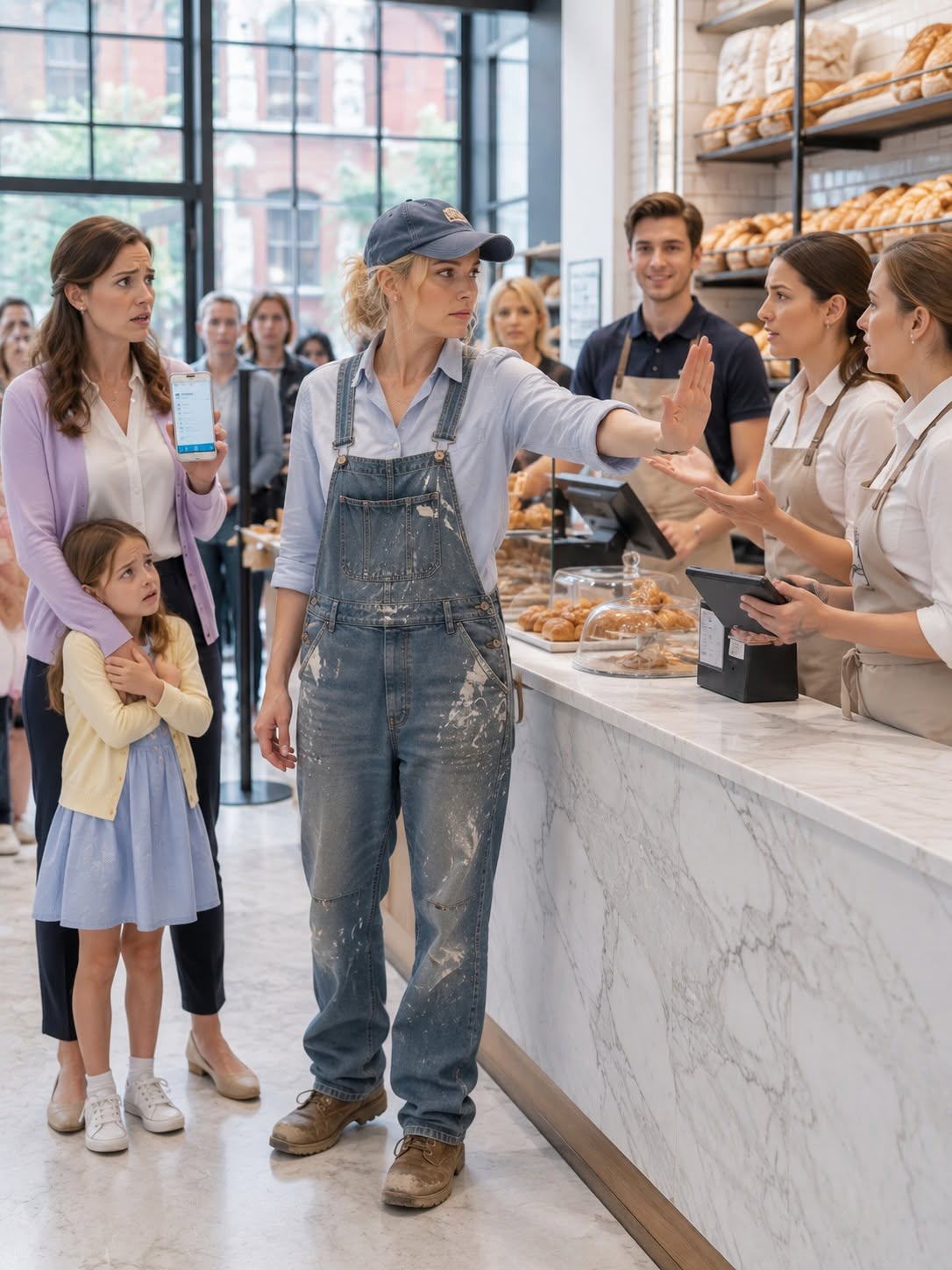
On a chilly Thursday morning, I walked into Crestview & Pine Market wearing muddy overalls, an old baseball hat, and borrowed work boots. Nobody recognized me as Charlotte Hansen, the owner of thirty-eight local markets across the state.
I came unannounced because I wanted to see how this store actually ran without corporate managers putting on a show.
My grandmother, Josephine, opened our very first store back in nineteen eighty-seven. She always said the lunch counter was the heart of the whole business. She even put a brass plaque over every door that said a customer’s wallet determines what they buy, but it never determines how you treat them.
Three months ago, customer complaints from our Lakeside branch started disappearing from our computer system. Sales looked great, but refunds, staff turnover, and weird cash adjustments kept going up.
Our regional manager, Geoffrey Jimenez, kept telling me it was just seasonal tourists and new workers making mistakes.
I wanted to check things out myself before ordering a real audit.
Behind the bakery counter, a shift supervisor named Brenda Foley looked me up and down like I was dirt on her shoe.
“The day-old bread is on the rack by the back door,” Brenda said, not bothering to smile. “Everything in this display case is full price.”
“I just wanted a breakfast sandwich and a small coffee,” I said.
Brenda pointed over at a touch-screen kiosk.
“Order on the screen, pay first, and don’t hang around the front tables unless you buy something,” she told me.
The register right next to her was wide open, but she just stood there with her arms crossed while I tried to navigate all the annoying pop-up ads on the screen.
I picked a six-dollar sandwich and a two-dollar coffee. But when the total popped up, it said eleven dollars and twenty-eight cents.
“Can I get a printed receipt?” I asked.
Brenda rolled her eyes and yanked the paper out. Right under the sales tax, there was an extra charge called Neighborhood Hospitality Contribution.
“What is this contribution for?” I asked.
“Community stuff, helping staff, neighborhood events, whatever corporate wants,” she said, sounding bored.
“Can I opt out of it?”
“Not after you pay. And standing there complaining isn’t going to fix it.”
There wasn’t a single person waiting behind me.
I folded the paper and sat at a table near the bakery where I could watch the registers, the food counter, and the customer service desk.
In less than fifteen minutes, I saw that my dirty clothes weren’t the only thing setting Brenda off.
An older guy wearing an old military jacket walked up to the register and handed the cashier a paper voucher from a local community assistance program.
The cashier, Gary Miller, held the paper up to the light like it was fake money.
“We stopped taking these last month,” Gary said.
The old man pointed to a blue sticker on the front window. “The clinic gave me this yesterday. They said you guys still accept them.”
“Well, the clinic lied to you,” Gary snapped.
He didn’t even try to call a manager. The old man sighed, took a carton of eggs and two cans of soup out of his bag, and put them back. He only kept a small box of oatmeal he could pay for with loose change.
Five minutes later, a woman dressed in expensive clothes walked up with the exact same voucher, saying her hotel manager recommended it.
Brenda processed it right away with a big smile and even gave her a free donut.
I wrote down the time, the register number, and their names in my notebook.
Next in line was a Deaf mother named Maria Santos. She was typing on her phone to communicate while her young daughter stood by the cookie rack.
Company rules say every counter has to use the digital translation tablet kept under the desk.
Brenda didn’t even touch it.
Maria showed her a message on her phone explaining that the shelf price for baby formula was four dollars cheaper than what the screen showed.
Brenda just started shouting real slow, like being loud would somehow help.
“THE COMPUTER PRICE IS THE REAL PRICE,” Brenda yelled.
Maria typed another note and pointed back to the shelf tag.
Gary laughed from his register. “Man, she should really bring someone who actually knows how to shop next time.”
The little girl heard him loud and clear. She looked down at her shoes and pulled her arms in close.
I was ready to jump in right then, but a worker from the bakery named Teresa Lopez walked over holding the translation tablet.
“I can go check the shelf price with her and fix the bill,” Teresa said gently.
Brenda stepped right in front of her. “Get back to the oven before I write you up for taking another break.”
“This isn’t a break. The customer needs help,” Teresa said.
“She can pay what’s on the screen or she can leave,” Brenda told her.
Teresa looked at Maria, then looked up at the security camera over the desk. “Store policy says we have to honor the shelf price if the tag isn’t expired.”
Brenda leaned in close. “Say one more thing and you can pack your stuff and leave too.”
Teresa unclipped her apron, but she didn’t drop it. “Maybe today is the day someone finally looks into those reports you keep deleting.”
Part Two: The Drawer Marked Community
Brenda tried to shove Teresa toward the back office, but I stepped in front of them.
“Before you write her up, I want my three-dollar contribution back,” I said.
Brenda turned on me, looking super annoyed. “I already told you, once the sale goes through, we can’t refund it.”
“The screen made it look like I had to pay it, but your website says all donations are optional,” I replied.
“Look, if three bucks is going to break your bank, you shouldn’t be buying coffee out,” Brenda sneered.
I dropped my receipt on the counter. “Just show me where this money goes and which local group got my three dollars.”
Brenda grabbed the store phone and pressed a button. “Security to the front desk, please.”
A guard named Marcus Berry walked over. He didn’t rush, which matched what I knew about him being a calm guy who didn’t like drama.
“Is someone acting up or making threats?” Marcus asked.
“This lady is causing a scene and asking for private store files,” Brenda said.
Marcus picked up my paper and looked at it. “She’s just asking why she got charged this extra fee.”
Brenda told him to throw me out. Marcus just stood there because I wasn’t breaking any rules. At least Geoffrey hadn’t ruined every single employee here.
Over at the next register, a college kid noticed his total jumped after Gary scanned a loaf of bread. He asked why a four-dollar hospitality charge was added when it wasn’t on his screen.
Gary quickly canceled the charge, typed in a code, handed three dollars in cash back to the kid, and put one dollar into an open cash drawer under the counter.
The drawer had the words COMMUNITY OUTREACH written on it with a black marker.
I watched Brenda pick up my receipt and drop it into that exact same drawer.
The whole scam was clear as day now. They were adding fake charges, giving back a little cash if someone complained, and keeping the rest. They targeted people who looked like they wouldn’t argue, while giving discounts to rich customers using the same tricks.
But stealing pocket change didn’t explain why this store’s overall numbers looked so high on paper. Someone was running a much bigger game.
Teresa leaned over while Brenda was busy arguing with Marcus. “That extra charge code gets slapped on hundreds of bills every week,” she whispered. “I reported it to Geoffrey Jimenez seven times, but every report just disappears after he visits.”
“Did you save copies?” I asked quietly.
She gave me a weird look. “Why is a painter asking me about store audits?”
“Because missing reports usually leave a paper trail somewhere,” I said.
Before Teresa could say anything else, a young worker came out of the back holding two big trays of sandwiches. Brenda pointed him toward the big trash can by the loading door.
“Those passed the eight o’clock time, so mark them as donated and throw them out,” Brenda told him.
The kid looked confused. “The shelter driver comes at ten to pick up donations.”
“The driver was complaining about labels last week, and I’m tired of dealing with ungrateful people,” Brenda barked.
Logging fresh food as donated before tossing it gave the store a fake tax break while stealing real meals from people who needed them.
I pulled out my phone and sent a quick text through our executive system.
Lakeside store. Lock all registers remotely, save all video, and send compliance, legal, and our shelter team down here right now. Do not call district management.
Brenda saw me on my phone and scoffed. “Calling your friends isn’t going to change how this store runs.”
“You’re right,” I said. “A phone call won’t change policy, but it sure can show who’s been breaking it.”
She told Marcus to push me out the door again. But before he could even move, every register screen in the store turned bright red with big letters.
TRANSACTIONS PAUSED BY CORPORATE COMPLIANCE.
Gary tried to slam the community cash drawer shut, but the electronic lock had already clicked into place.
Part Three: The Name Above the Entrance
Two corporate cars pulled up front about twelve minutes later. Patricia Ruiz, our top compliance officer, walked in with our legal team, accountants, our accessibility manager, and the person in charge of our food shelter programs.
Brenda put on a fake smile and ran up to them.
“Ms. Ruiz! Nobody told us we were having an inspection today, but welcome to our store!”
Patricia didn’t even look at her. She walked straight past Brenda and stopped right in front of me.
“Ms. Hansen, the registers are locked, the footage is saved, and our team has pulled five years of records,” Patricia said.
The whole store went dead quiet.
I took off my old baseball cap.
“I’m Charlotte Hansen. I own this company.”
Gary almost dropped his clipboard. Brenda looked at me, then looked up at the big picture of Josephine Hansen on the wall, finally realizing why I looked so familiar.
“You lied to us,” Brenda stuttered.
“I walked in as a normal customer, and you made up your own mind about who I was,” I told her.
Patricia had Marcus open the cash drawer. Inside, they found almost two thousand dollars in cash, hand-written notes, fake refund slips, and little envelopes with staff initials on them.
Gary threw Brenda under the bus right away. “It was all her idea! She said the money was for our staff bonuses because corporate didn’t pay us enough!”
Brenda turned on him, yelling, “You took your cut every Friday and never complained once!”
I asked Maria Santos and her daughter to come back over. Our accessibility manager started talking to her in sign language right away. We said we were deeply sorry, fixed the price on her baby formula, and promised in writing that we would investigate every time she was treated unfairly here.
Marcus went out to the parking lot and brought the old veteran back inside. Patricia took care of his voucher herself and told him it was always good at our store.
An apology doesn’t fix being humiliated, but you have to start by owning up to what happened.
Teresa handed our legal team a thumb drive full of photos, work schedules, emails, and copies of the complaints she had sent. She had been collecting proof for eight months while Geoffrey kept brushing her off.
Her files showed that the cash drawer was just a tiny piece of what was going on.
Geoffrey was forcing store supervisors to pad donation numbers, log tossed food as shelter gifts, and deny real discounts to customers who wouldn’t make a fuss. Those fake numbers made his branch look amazing, which got him huge quarterly bonuses, while the stolen cash paid off the local managers who went along with it.
He told managers to mark customer complaints as resolved without ever calling the customers back. Stores with great scores got bigger budgets and more staff, which kept honest workers from speaking up.
Brenda had pocketed nearly twenty-two thousand dollars from this scheme. Gary took six thousand, and Geoffrey made over ninety thousand across four different stores.
“I didn’t know how big it was,” Brenda sobbed. “Geoffrey told us corporate approved these side bonus funds.”
“You knew the money was taken from customers without their permission,” I said. “And you picked on vulnerable people because you thought they wouldn’t fight back.”
She started crying. “I have a house payment and a son to feed.”
Maria’s daughter was still standing near the display, watching us. I looked at the girl before I answered Brenda.
“Having a family should have reminded you why other families deserve to be treated right.”
Our lawyers suspended Brenda and Gary on the spot, and our auditors handed the cash records over to the police.
We closed the store for the rest of the day so the audit team could talk to all the workers. We routed customers to our other store down the road and offered free delivery for anyone who needed it.
Geoffrey strolled in forty minutes later, furious that the register lock was hurting his daily sales figures. He came in through the back loading dock and walked right into Patricia’s team.
The second he saw me standing there, his face dropped.
“Charlotte, look, I can explain the mix-ups. The staff just isn’t trained right,” Geoffrey stammered.
“Start by explaining why seven reports from Teresa Lopez went straight to your trash folder,” I said.
He tried to blame a computer glitch, but Patricia pulled up records showing he forwarded her emails to his private account before deleting them from the company system.
Then he blamed Brenda, even though we found weekly text messages from him telling her to hit donation targets and promising she wouldn’t get audited.
When that didn’t work, he turned on me.
“You guys at corporate set crazy targets for profit, donation numbers, and customer scores! People do what they have to do when top management demands impossible results!”
What he said hit close to home, and I couldn’t just pretend he was entirely wrong.
“You chose to steal,” I told him flatly. “But I approved a system that rewarded good numbers without checking how people got them. You’re going to pay for your choices, and I’m going to fix mine.”
Part Four: The Audit Beyond One Store
We launched a full audit across all thirty-eight stores. We shut off manual donation charges, froze manager bonuses, locked down complaint logs, and warned our bank that thousands of customers were going to need refunds.
Four other stores had similar issues linked back to Geoffrey. Some managers were pushing cashiers to force donations, while others were turning away voucher users because those orders took a few extra minutes to process.
Our corporate board wanted to put out a tiny statement blaming a few bad apples. I said no way. Geoffrey used our own bonus system to hide what he was doing, and we had to face that.
At a press conference three days later, I stood under my grandmother’s plaque and admitted where we failed.
“Some of our staff stole from customers, faked charity logs, and mistreated people,” I told the reporters. “It went against everything we stand for, and our lack of oversight let it happen even after workers warned us. Firing a few people doesn’t fix a broken system.”
We refunded every forced charge with interest, plus a fifty-dollar store card for every affected customer. Our finance team tracked down transactions using register logs and loyalty cards.
We paid back the local shelters and set up six months of free, tracked food deliveries. Every donation now needs a photo, a signature from the shelter, and a public report every month.
We took customer complaints away from regional managers and gave them to a new, independent office. Accessibility issues now go straight to a dedicated team, and workers who report problems get a tracking number that goes right to the board’s ethics committee.
We changed how we evaluate managers too. No more bonuses just for high donation numbers or perfect review scores. Now we look at pricing accuracy, accessibility, staff turnover, and unannounced store visits.
Geoffrey ended up pleading guilty to theft and fraud. Brenda and Gary signed papers to pay back what they took after agreeing to help the prosecutors. Their personal struggles were taken into account by the judge, but having a tough time at home doesn’t give anyone the right to steal from their neighbors.
Teresa took the job as the new store manager, but only after she got the power to hire a dedicated accessibility staff member and rebuild our shelter program. She turned down our first offer because she felt we were just using her for good PR.
“If you want my picture on your news release, I need real say over the store budget,” she told me.
She was totally right, and we updated her contract to give her that power.
Part Five: What the Market Owed Its Neighborhood
Six months later, I walked back into the Lakeside store without any disguise. The place looked brighter and cleaner. Teresa had held off on fancy cosmetic upgrades until the store actually fixed its relationship with the neighborhood.
The food donation area now had refrigerated lockers and clear digital logs. The main counter had translation tablets ready to go, clear price match signs, and a simple button on the kiosk to skip donations.
Maria Santos joined our community advisory board as a paid consultant. Thanks to her, we added visual ordering screens, sign language training for workers, and better tools for customers who need assistance.
The local medical clinic started using their voucher program with us again. The old veteran I met months ago still comes in every Tuesday, though he still reads his receipt pretty carefully before walking out.
Near the bakery, the old cash drawer Gary used for stolen money was sitting inside a glass display case. Teresa turned it into a suggestion box, and every note dropped inside gets a public tracking number.
“It felt a little weird keeping it at first,” Teresa told me as we stood by it. “But I wanted to turn something bad into something good.”
I ordered an egg sandwich and a coffee from the screen. The total was spot on, and the donation page had big, obvious buttons for YES, NO, and MORE INFO.
A young guy brought my food over to my table. My receipt showed every single line item clearly, with no hidden fees or weird names.
Teresa sat down to join me for a quick break.
“Do you still go around doing secret visits at other stores?” she asked.
“Once in a while,” I smiled. “But I don’t pretend one random visit tells me everything about a store anymore.”
“Your grandmother probably figured that out a long time ago,” Teresa said softly.
I looked up at Josephine’s picture above the counter.
“She spent way more time talking to dishwashers than looking at spreadsheets,” I said. “She knew people only tell you the truth if they feel safe speaking up.”
Over by the front door, Maria and her daughter walked in for our afternoon meeting. The little girl picked out a chocolate pastry, then signed a quick thank-you to the guy behind the bakery counter. He signed right back and handed her the bag with a smile.
I used to think keeping my grandmother’s legacy alive was just about catching bad employees. But this whole audit proved it was really about checking the systems I built myself, especially when those systems cared more about nice numbers than real people.
Before I left, I pulled out the old receipt from my very first visit. The ink was a bit faded, but that three-dollar charge was still there under my coffee.
I folded it up and slipped it into the glass suggestion box with a short note:
Never create a fee, a target, or a rule that relies on a customer being too shy to say no.
Teresa read the note through the glass and locked the box.
“Should I give this note a tracking number?” she asked with a grin.
“Definitely,” I said. “Because managers should never send in a concern that just vanishes.”
Outside, a light rain was falling over the harbor as customers kept coming in under the brass plaque with my grandmother’s promise.
Some were in nice coats, others in work clothes, scrubs, or old jackets from a long day on their feet.
The store owed every single one of them the exact same fair price, the exact same patience, and the exact same welcome.
That duty doesn’t start when someone important walks in the door.
It starts by refusing to judge who looks important in the first place.
THE END